“No Red Lanes on Ocean Avenue”, Chinese American merchants, residents and community members in San Francisco say

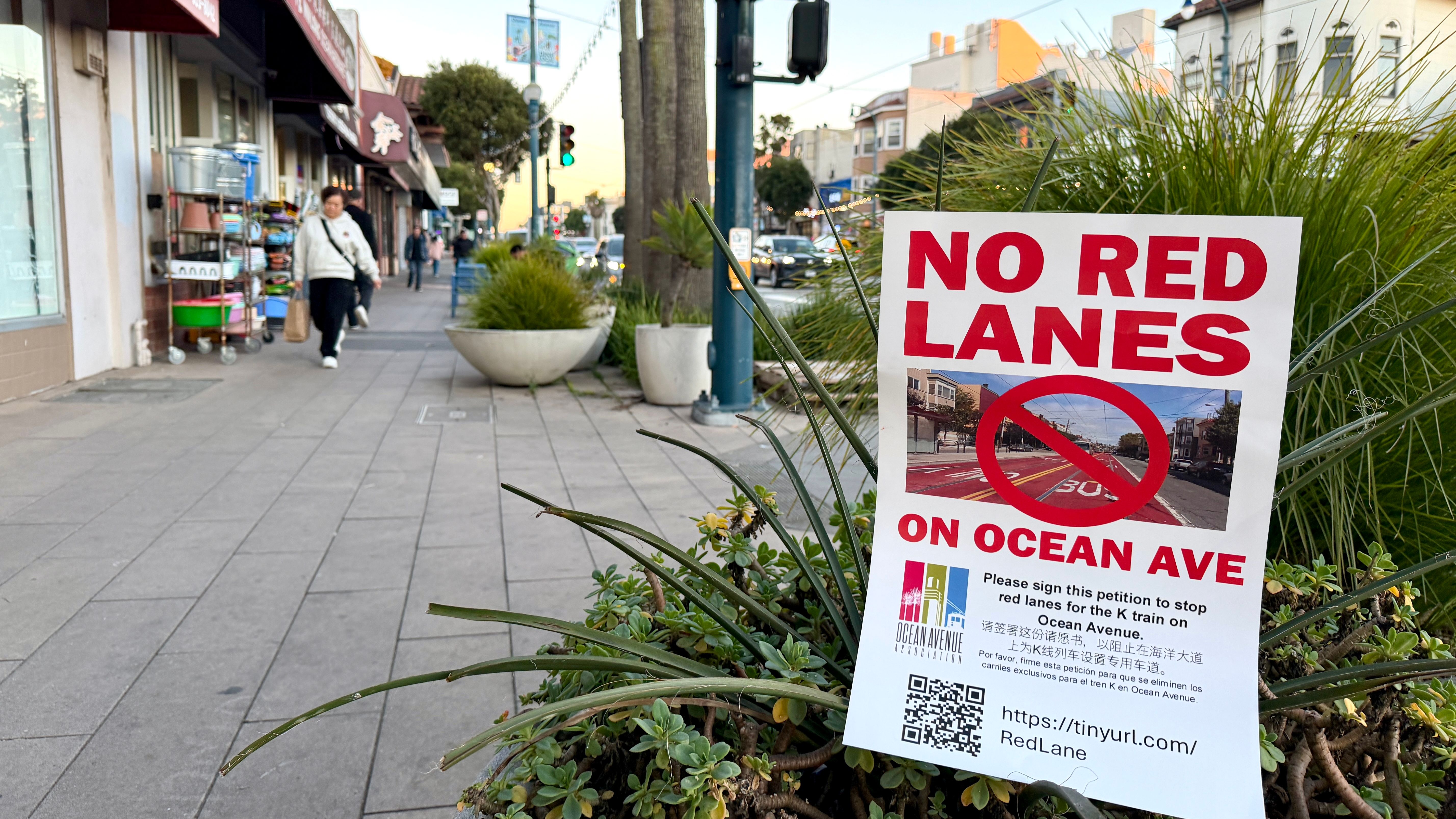
SAN FRANCISCO — As the Asian population has continued to grow in the southwest sector of San Francisco in recent decades, the Ocean Avenue portion within the Ingleside and Oceanview neighborhoods has become an emerging major business corridor for the Asian community. Asian merchants and residents citywide have overwhelmingly spoken out against the K-Ingleside Rapid Project in which red-transit-only lanes in both directions along that Ocean Avenue corridor would be added.
Although the San Francisco Municipal Transportation Agency (SFMTA) announced on January 13, 2026 the installation of red transit only lanes to be paused immediately, members of the Asian community who opposed the red lanes coming to the Ocean Avenue corridor said they were worried that the plan would come back alive again soon.
"District 7 Supervisor Myrna Melgar’s office and District 11 Supervisor Chyanne Chen’s office will organize a working group to discuss potential transportation improvements on Ocean Avenue and ensure responsiveness to potential impacts to residents and small businesses along this corridor," SFMTA stated in the announcement on January 13, 2026.
The SFMTA also announced that other parts of the project would be continued to move forward including adding restrictions of left turns along the Ocean Avenue corridor.
"We still plan to add left turn restrictions at five Ocean Avenue intersections in January. These changes keep transit stops clear by improving traffic flow, and enhancing safety for people walking on Ocean Avenue," SFMTA said.
Those five intersections for no left turns along the Ocean Avenue will be:
- No left turn from Ocean Avenue onto Brighton Avenue (southbound),
- No left turn from Ocean Avenue onto Plymouth Avenue (northbound),
- No left turn from Ocean Avenue onto Miramar Avenue (southbound),
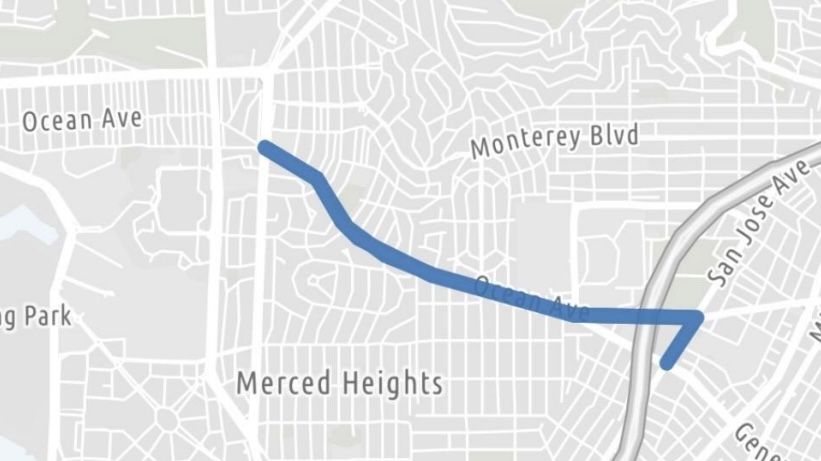
- No left turn from Ocean Avenue onto Jules Avenue (southbound),
- No left turn from Ocean Avenue onto Lakewood Avenue (northbound).
"This bus lane project along the Ocean Avenue corridor was approved by the SFMTA Board 4 years ago," said District 11 Supervisor Chyanne Chen in a response to Wind Newspaper's inquiry on the project. "I attended the most recent SFMTA community meeting in December, it became clear that many merchants and community members were not aware of the plan and/or its impacts."
"Implementation of the K-Line red lane is currently paused. My office is committed to a more inclusive and transparent process that brings stakeholders together to understand concerns and identify solutions that work for the community," Chen further said. "I am open to all options as we work collaboratively to move the neighborhood forward."
District 7 Supervisor Myrna Melgar did not respond to the inquiry by press time.
The K-Ingleside Rapid Project is part of the Ocean Avenue Mobility Action Plan which was developed by the San Francisco County Transportation Authority (SFCTA) in 2021. A final report of the plan was released in June 2023.
According to the Transportation Authority, at the request of Supervisor Myrna Melgar who also serves as the SFCTA board member, SFCTA formed a task force of residents, businesses, and community representatives to prioritize existing transportation concepts and identify new concepts to improve transportation along Ocean Avenue.
The Ocean Avenue Mobility Action Plan was also conducted in coordination with the SFMTA, San Francisco Department of Public Works and the San Francisco Planning. The project was funded by the SFCTA's Neighborhood Program and SFMTA's Community Response Team Funds.
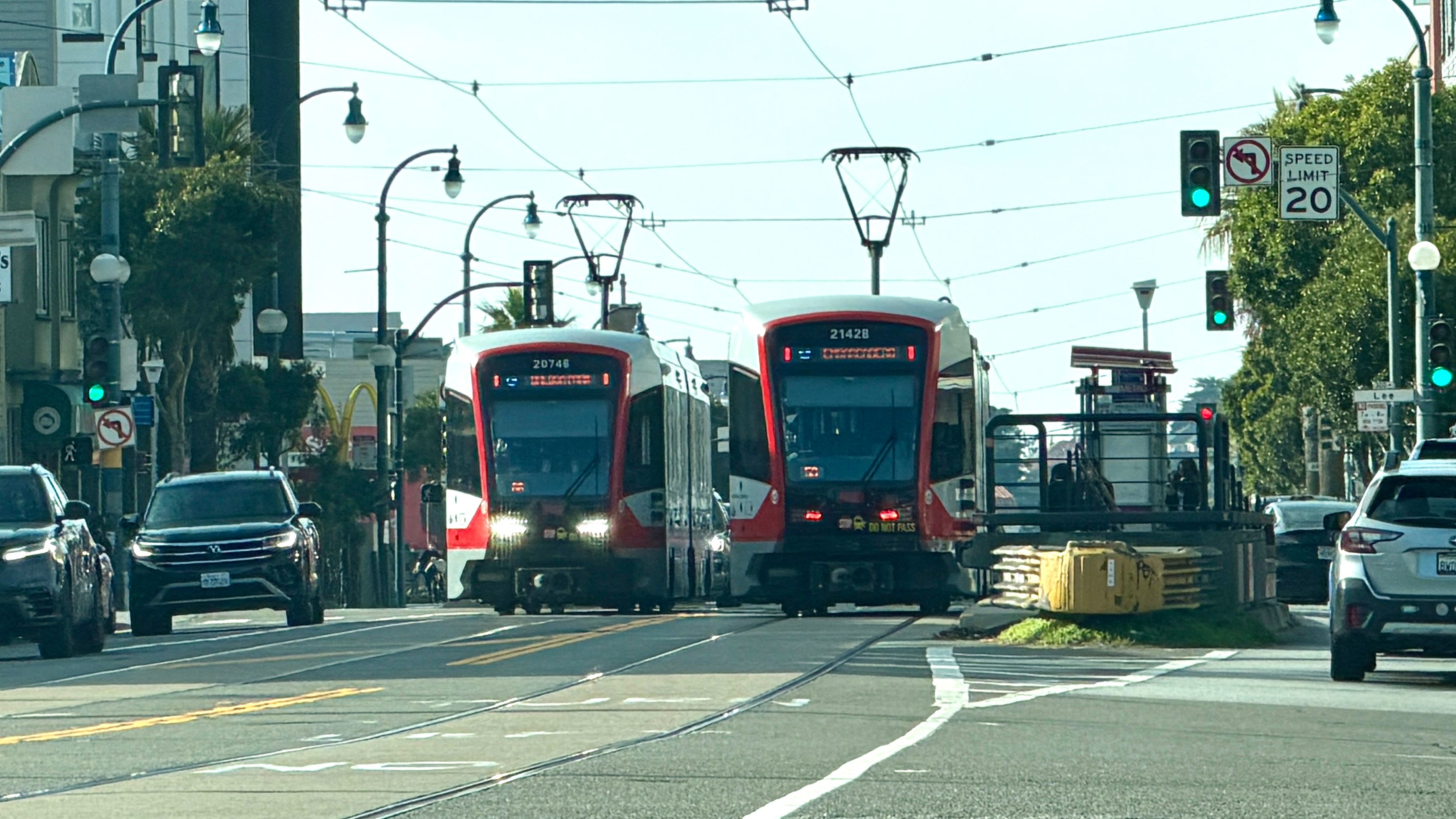
Under the Ocean Avenue Mobility Action Plan and the K-Ingleside Rapid Project, the SFMTA originally scheduled to implement the new "Public Transit Only" lanes in January 2026 by first painting one of the two lanes in each direction of the Ocean Avenue corridor.
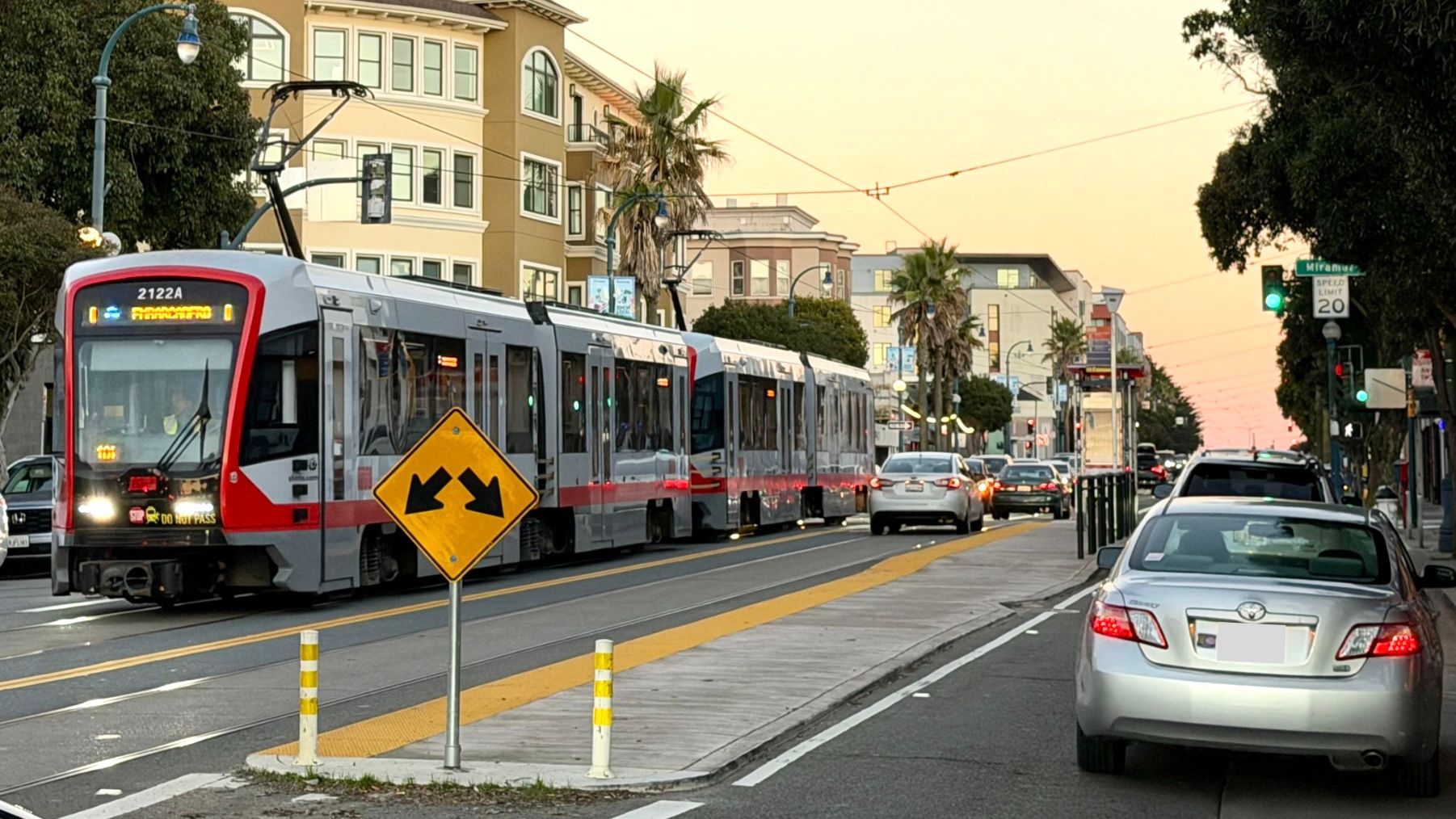
The "Public Transit Only" lanes are commonly known as red lanes or bus lanes with restrictions for private vehicles to use. The K-Ingleside Rapid Project focuses on the K line light rail trains which connect the Ingleside and nearby neighborhoods to downtown.
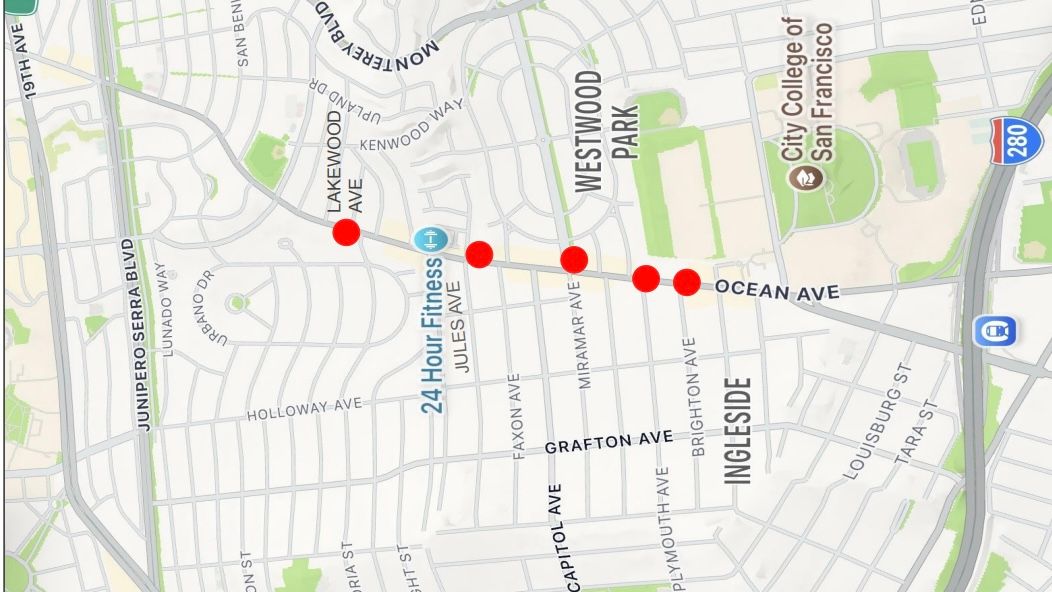
The SFMTA has planned to add the red/bus lanes on the Ocean Avenue between San Jose Avenue to Junipero Serra Blvd. in both south and north directions.
The Ocean Avenue Association Board Chair Kath Tsakalakis started the petition to stop the red lanes for the K train on Ocean Avenue. "The introduction of red lanes on Ocean Avenue will squeeze vehicles into one lane. While small businesses are all for safe and efficient public transport, we do not want to make it even harder for people to shop and dine on Ocean Avenue," Tsakalakis and supporters said on the petition.
"The street conditions have changed and SFMTA should reevaluate the red lanes with new input from the community. We must help our small businesses survive," the petition further stated. "Small businesses depend on visibility, customer access, parking, deliveries, and foot traffic. Red lanes will choke sales for small businesses because fewer customers will brave the congestion. A decline in customers will lead to closures, loss of jobs, and a less vibrant Ocean Avenue."
Juan Zhou Xu and her husband Bing Xu are the owners of Wang Wah Golden China restaurant on Ocean Avenue which is the oldest Chinese restaurant in the Ingleside neighborhood founded 40 years ago in 1985.
"Is the SFMTA always making nonsense policies? They should come here to study the real situation and the impact if one of the two lanes becomes a red lane in each direction," said Bing Xu, who has joined the petition to stop the red lane on Ocean Avenue.
Bing and Juan Zhou Xu recalled that the City had removed four parking meters in front of their restaurant years ago. "Now the City wants to take away two entire lanes for private vehicles to use? The K trains come only every 15 or 20 minutes. The City likes to see the rest of the time 24/7 for two entire lanes to be empty and exclusively used by K trains?" said Juan Zhou Xu.
In each direction, there will be only one lane for private vehicles on Ocean Avenue after adding a red lane. "There is a dialysis center on Ocean Avenue which is only one block from our restaurant. Patients need to be dropped off in front of the center. It is not difficult to know what the traffic will be when the only one lane needs to be blocked for use for certain time every day. The red lane hurts everyone," Bing Xu said with frustration. "We have more neighbors driving than taking buses."
Francis Li was a student at the City College of San Francisco prior and currently lives in another neighborhood in the City. He returned to the Ocean Avenue corridor to buy his favorite lunch on a Saturday when he was asked for comments.
"How are the vehicles able to get through smoothly if there is only one lane available in each direction?" said Li, a young professional. He remembered during commute hours on weekdays and school days, the traffic on Ocean Avenue was always very busy and sometimes jammed when he was a student at City College. "It doesn't make sense to make one of the two lanes to be a red lane."
A few workers including Miss Huang at an Asian supermarket on Ocean Avenue were strongly against the red lane plan. "We don't see there is any problem presently with both lanes open for all vehicles in each direction. The traffic is fine here. The red lanes would discourage people and customers coming to Ocean Avenue. It doesn't help business but hurts," Huang said.
P. Tang and his wife live in the neighborhood and always shop on Ocean Avenue. They are both public transit riders and drivers. "No opinion," P. Tang responded when he was asked for his position on the red lane plan.
Tang’s wife added that they didn't feel the City and the SFMTA would listen to them even if they voiced their opinions. She remembered that the community was against some parking spaces being removed by the SFMTA in the neighborhood years ago. "The SFMTA would listen to the bike, public transit and other advocacy groups instead of us, merchants and residents," she said.
Henry Tang lives in the downtown of San Francisco and came to Ocean Avenue with his young daughter on a Saturday for Chinese food. "I am driving. Of course I oppose the red-lane idea on Ocean Avenue," said Tang when asked for comments. "If the traffic is bad on Ocean Avenue, I would hesitate to come here for food."
Shirley Chang lives in Mission and likes to shop in the Sunset District. Chang always crosses town from east to west through several routes including the Ocean Avenue corridor. "Everyone has the rights to sharel public roads. The City’s plan to add bus lanes to Ocean Avenue is kind of similar to the situation of closing the Great Highway," said Chang.
"When the City made a decision to close or restrict the use of a public road, it would impact more people beyond the nearby residents and merchants. The City should have a broader vision to look deeply on the impacts, not only to benefit public transit riders," Chang added.
______________________________
Portia Li is the editor and publisher of Wind Newspaper. Prior to co-founding the Wind Newspaper in 2020, Portia was a senior and investigative reporter at the San Francisco Bureau of World Journal for over three decades. She was born and raised in Hong Kong, educated in Taiwan and the United States. She has a bachelor’s degree in Journalism from National Chengchi University of Taiwan and a master’s degree in Mass Communication from Utah State University. In 2021, Portia was a recipient of the Society of Professional Journalists (SPJ) Northern California Chapter’s Career Achievement Award in Print. She can be reached at portia@WindNewspaper.com.
- Prop G gets a second chance for San Francisco voters to decide the fate of the Upper Great Highway in the November election
- 23 parking spaces during commute hours added in Chinatown amid 3 major renovation projects
- Asian supermarkets are booming in the San Francisco Bay Area with intense industry competition
- Architect Dartmond Cherk: Taking away this symbolic bridge would deflate the standing of the Chinese community in San Francisco
- Our Mission and Policy
- San Francisco: Kearny Street, between Clay and Washington streets, to be fully closed Aug. 1-2 and Aug. 8-9; Broadway Tunnel closed Aug. 15-16
- Carla Lee Hurley and Kirk Yin, 2 bilingual and community-oriented police officers, promoted to Captains in SFPD
- Over 15,000 signatures submitted, San Francisco citywide voters might have a chance to reopen Upper Great Highway