U.S. Department of Homeland Security proposes green card status can be denied for Medicaid and SNAP recipients

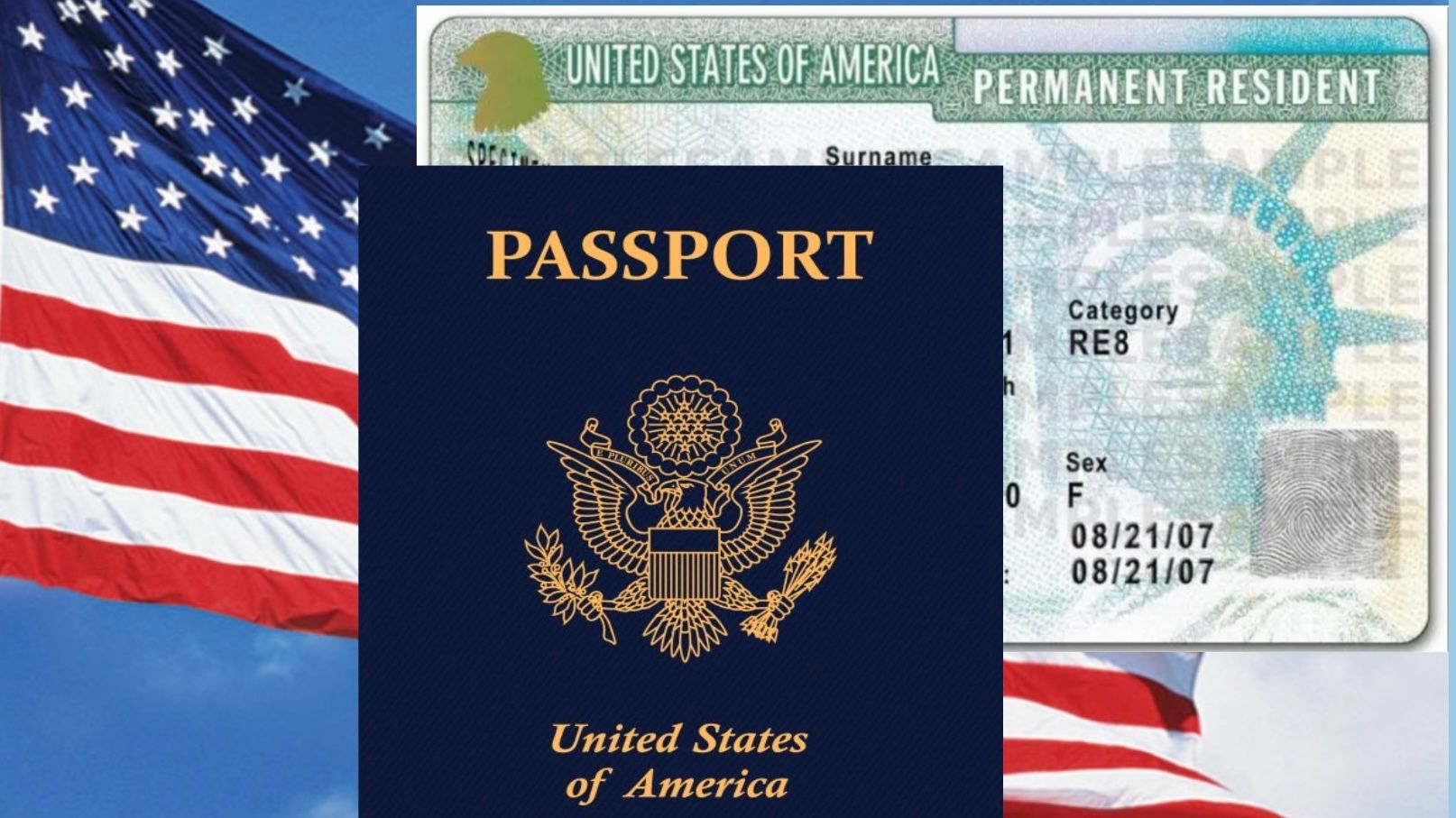
SAN FRANCISCO — If the government finds that a non-citizen individual is likely to become a "public charge", which includes receiving Medicaid and the Supplemental Nutrition Assistance Program (SNAP, formerly known as Food Stamps) benefits, that individual's lawful permanent resident status might be denied under the latest proposed rule announced by the U.S. Department of Homeland Security (DHS) in November 2025.
Healthcare advocates and 20 states' attorneys general have publicly opposed the proposed rule that would threaten legal immigration statuses and frighten families away from seeking medical care.
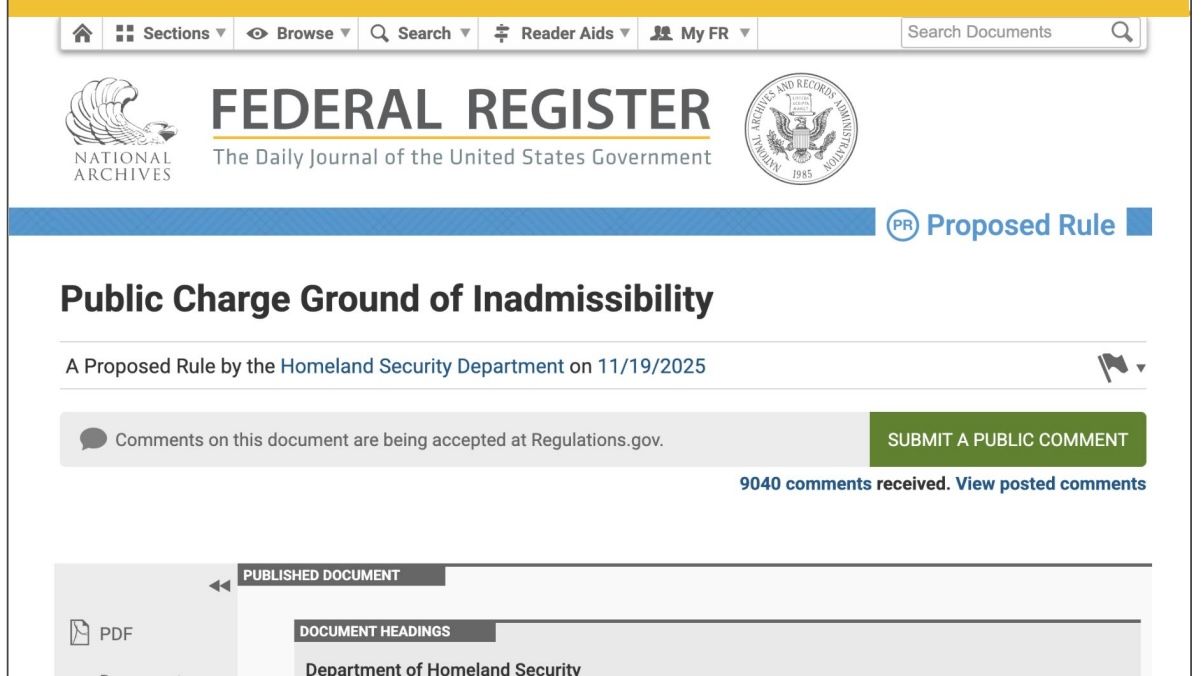
On November 19, 2025, the Department of Homeland Security (DHS) and the U.S. Citizenship & Immigration Services (USCIS) posted on the Federal Register for public inspection a Notice of Proposed Rulemaking proposing to rescind the 2022 Biden Administration Public Charge rule.
Under the U.S. Immigration and Nationality Act, a noncitizen who is likely to become a public charge is generally inadmissible to the United States and ineligible to become a lawful permanent resident.
Public charge is a longstanding part of federal immigration law in the process of granting permanent residency (also known as green cards) applications. The public charge inadmissibility test was designed to identify people who may depend on the government as their main source of support and may be denied permanent residency or non-immigrant admission to the country.
The 2022 Biden administration rule limited the consideration of public charge to cash assistance and long-term institutionalization. The DHS's proposed public charge rule rescinds nearly the entirety of the 2022 Biden rule and includes a new interpretation of public charge. The proposal also allows immigration officials to use their own discretion to decide what should be included on public charge related to the applicants.
The American Hospital Association (AHA), which represents 5,000 member hospitals, health systems, health care organizations and clinician partners including more than 270,000 affiliated physicians, 2 million nurses and caregivers, and 43,000 health care leaders, opposes the proposed rule and is concerned that it will cause a "chilling effect" that could disrupt coverage for lawfully present populations who are eligible for Medicaid and the Children’s Health Insurance Program (CHIP).
"The proposed rule’s ripple effects could impact the health of all Americans, including citizens, should those living among them delay preventive care due to lack of coverage. The AHA urges DHS to exclude Medicaid and CHIP from its public charge determinations," AHA Senior Vice President Ashley Thompson wrote in a public letter to Joseph Edlow, Director of the U.S. Citizenship and Immigration Services, on December 19, 2025
"Under this proposal, officers could consider a wider range of public benefits, including Medicaid, CHIP, SNAP, supplemental or special-purpose benefits, and any other information they determine to be relevant to the public charge determination," Thompson stated in the letter. "While the One Big Beautiful Bill Act (OBBBA) clarified that certain categories of legal immigrants remain eligible for Medicaid and CHIP, this proposed rule threatens to undermine that statutory intent."
"DHS acknowledges that disenrollment from programs like Medicaid and CHIP can lead to a reduction in revenues for hospitals participating in Medicaid. However, it did not consider the extent of the impact of coverage loss on the broader communities hospitals serve," Thompson said.
Federal law requires hospitals to provide emergency care to all individuals, regardless of immigration status, availability of health insurance or a patient’s ability to pay. "Many hospitals are already experiencing negative hospital margins, and this regulation would exacerbate those challenges," said Thompson.
The national Medicare Rights Center opposes the proposed rule. "An expanded and erratically enforced system is likely to have an alarming chilling effect on immigrants and families, causing many people to avoid seeking health care or benefits for their citizen children out of fear that it would damage their future immigration statuses," the Center said in a statement.
"This new system would build on the damage from the 2025 budget bill—HR1, which strips eligibility for most health coverage including Medicare from most immigrants," the Center wrote. "At Medicare Rights, we oppose this proposal. While some officials may apply the test fairly, increasing discretion can put prospective immigrants at risk of facing unfair and inequitable application."
California Attorney General Rob Bonta announced on December 19 that he co-led a coalition of 20 attorneys general in sending a joint comment letter to Kristi Noem, Secretary of U.S. Department of Homeland Security, and Joseph Edlow, Director of U.S. Citizenship and Immigration Services, to oppose the proposed cancellation of the Biden administration "public charge” rule.
The 2022 Biden rule prohibited immigration officials from considering the use of non-cash public benefits, such as SNAP and Medicaid, when determining whether a non-citizen can obtain or keep legal immigration status, Bonta said. "The proposed rule, if finalized, would cause uncertainty in the immigration system and discourage eligible immigrants and their families from accessing beneficial health, nutrition, and housing programs."
The attorneys general of 20 states requested withdrawal of the proposed rule, arguing that it was a departure from Congress’s well-established interpretation of “public charge” and would cause massive harm to states and their residents.
"Without access to preventative health coverage, many of these non-citizens would only access care in the most dire, costly, and emergency situations," 20 state attorneys general said. "While the proposed rule would cause disenrollment, the underlying medical, housing, and nutrition needs will not disappear; they will simply reappear as uncompensated care and emergency assistance that state and local governments absorb."
Bonta co-led the letter with Attorney General Letitia James of New York, Kwame Raoul of Illinois, and Keith Ellison of Minnesota. They were joined by 16 state attorneys general from Colorado, Connecticut, Delaware, the District of Columbia, Hawaii, Maine, Maryland, Massachusetts, Michigan, Nevada, New Jersey, New Mexico, Oregon, Rhode Island, Vermont, and Washington.
- Asian supermarkets are booming in the San Francisco Bay Area with intense industry competition
- Architect Dartmond Cherk: Taking away this symbolic bridge would deflate the standing of the Chinese community in San Francisco
- Our Mission and Policy
- San Francisco: Kearny Street, between Clay and Washington streets, to be fully closed Aug. 1-2 and Aug. 8-9; Broadway Tunnel closed Aug. 15-16
- Carla Lee Hurley and Kirk Yin, 2 bilingual and community-oriented police officers, promoted to Captains in SFPD
- Over 15,000 signatures submitted, San Francisco citywide voters might have a chance to reopen Upper Great Highway
- 4-block Red Lane pilot project on Ocean Avenue presented, local merchants and residents oppose and ask for an immediate halt
- Chinese Newcomers Center holds annual food giveaway in San Francisco Chinatown for 5,000 seniors and low-income families citywide