Chinese community members say Prop H unfairly makes property owners pay for San Francisco public transit’s shortfalls

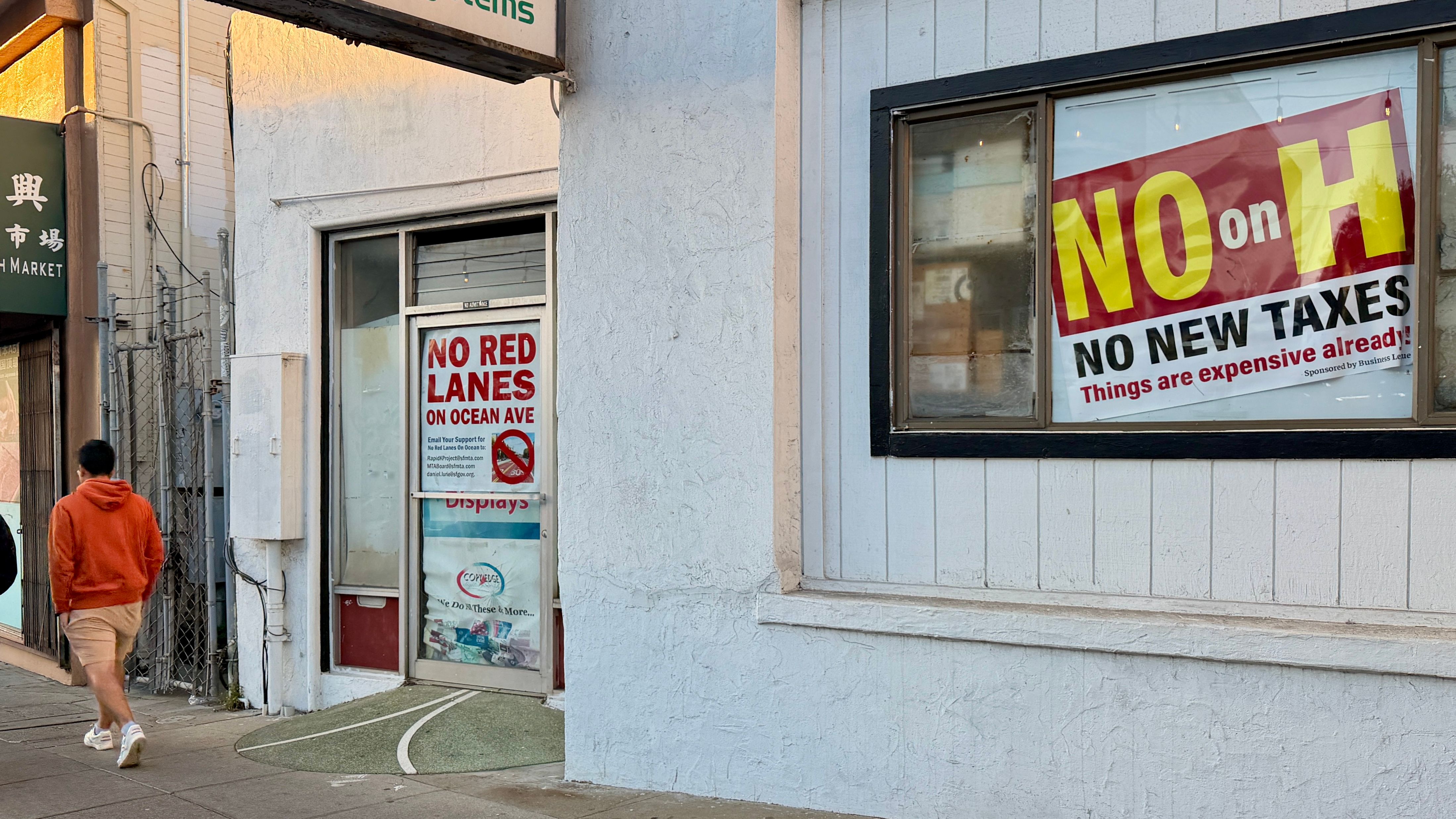
SAN FRANCISCO — Although no official political campaign has been established to challenge San Francisco's Proposition H (Prop H) — a ballot measure to create a 15-year parcel tax to fund the City's public transit agency — members of the Chinese community have been quietly campaigning and appealing to voters in opposition of Prop H.
There are 10 local ballot measures for San Francisco voters to decide in the November 3 election. Among them, Propositions G and H are the focus of the Chinese community members campaigning via social media platforms and in community activities.
Their official and unofficial campaigns are asking voters to support Prop G, which aims to reopen the Great Highway for private vehicles on weekdays, and vote no on Prop H, which proposes to fund the San Francisco Municipal Transportation Agency (SFMTA) by creating a new tax for 15 years for all residential and commercial property owners in the City.
Mayor Daniel Lurie authored Prop H. In March, he started the "Stronger Muni for All" ballot measure campaign to collect signatures to place the initiative on the November 3 election ballot. Lurie proposed taxing property owners exclusively to save the SFMTA and its services which were projected to have a $307 million budget shortfall.
Proposed tax rates in 2027 under Prop H
Under Prop H's proposal, the measure would impose an annual tax on residential and commercial real property parcels in San Francisco beginning on July 1, 2027, and continuing until June 30, 2042 for a period of 15 years.
The tax would be adjusted annually for inflation. The proposed 2027 tax rates would be:
— Single-family residential parcels: base tax of $129 for the first 3,000 square feet of building area, plus marginal rates of $0.42 per square foot of building area between 3,001 and 5,000 square feet, and $1.99 per square foot of building area over 5,000 square feet.
— Multi-family residential parcels: base tax of $249 for the first 5,000 square feet of building area, plus a marginal rate of $0.195 per square foot of building area over 5,000 square feet, capped at $50,000 per parcel.
— Non-residential parcels: base tax of $799 for the first 5,000 square feet of building area, plus marginal rates of $0.76 per square foot of building area between 5,001 and 50,000 square feet, $0.84 per square foot of building area between 50,001 and 250,000 square feet, and $0.99 per square foot of building area over 250,000 square feet, capped at $400,000 per parcel.
— Mixed-use (residential and commercial) parcels: base tax of $799, plus a combination of the marginal rates for residential and non-residential parcels above if the mixed-use parcel has more than 5,000 square feet of building area, capped at $400,000 per parcel.
— Parcels with no buildings: no tax if the land area is up to 2,000 square feet, or $392 if the land area is over 2,000 square feet.
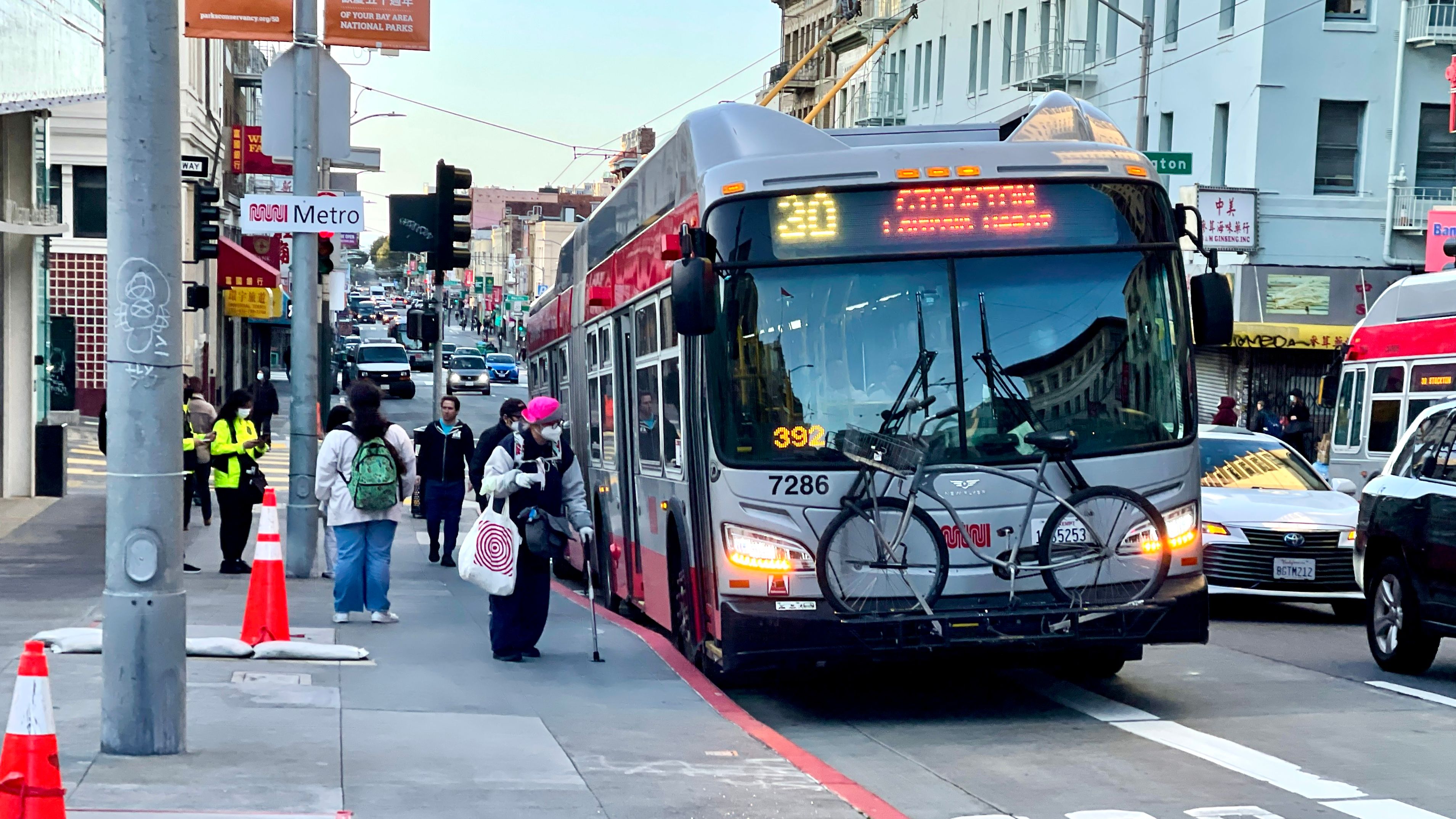
Prop H offers exemptions to buildings with single-room-occupancy (SRO) units and most properties owned and occupied as a primary residence by a person who is at least 65 years old.
Owners of properties with rent-controlled residential units could pass through up to 50% of the tax imposed by Prop H to their tenants, capped at $65 per unit, if the initial base rent was set before June 1, 2027.
5-county Regional Transit Measure (RTM) will fund SFMTA if it passes
Voters in five San Francisco Bay Area counties will also decide on a regional ballot measure, the Regional Transit Measure, on whether to raise their sales tax rate by 0.5% or 1% for the next 14 years to fund seven major public transit systems facing significant deficits, including BART, Muni, Caltrain, AC Transit, Santa Clara Valley Transportation Authority, San Francisco Bay Ferry, and Golden Gate Transit.
Those five counties in the Bay Area are Alameda, Contra Costa, San Francisco, San Mateo and Santa Clara. If the Regional Transit Measure passes, the sales tax rate in San Francisco will increase by 1%; the rates in the other four counties will increase by 0.5%.
All 11 members of the Board of Supervisors and the San Francisco Democratic Party endorsed Prop H. Chinese American elected officials who have endorsed Prop H are Supervisors Connie Chan and Chyanne Chen, and San Francisco Democratic Party Chair Nancy Tung.
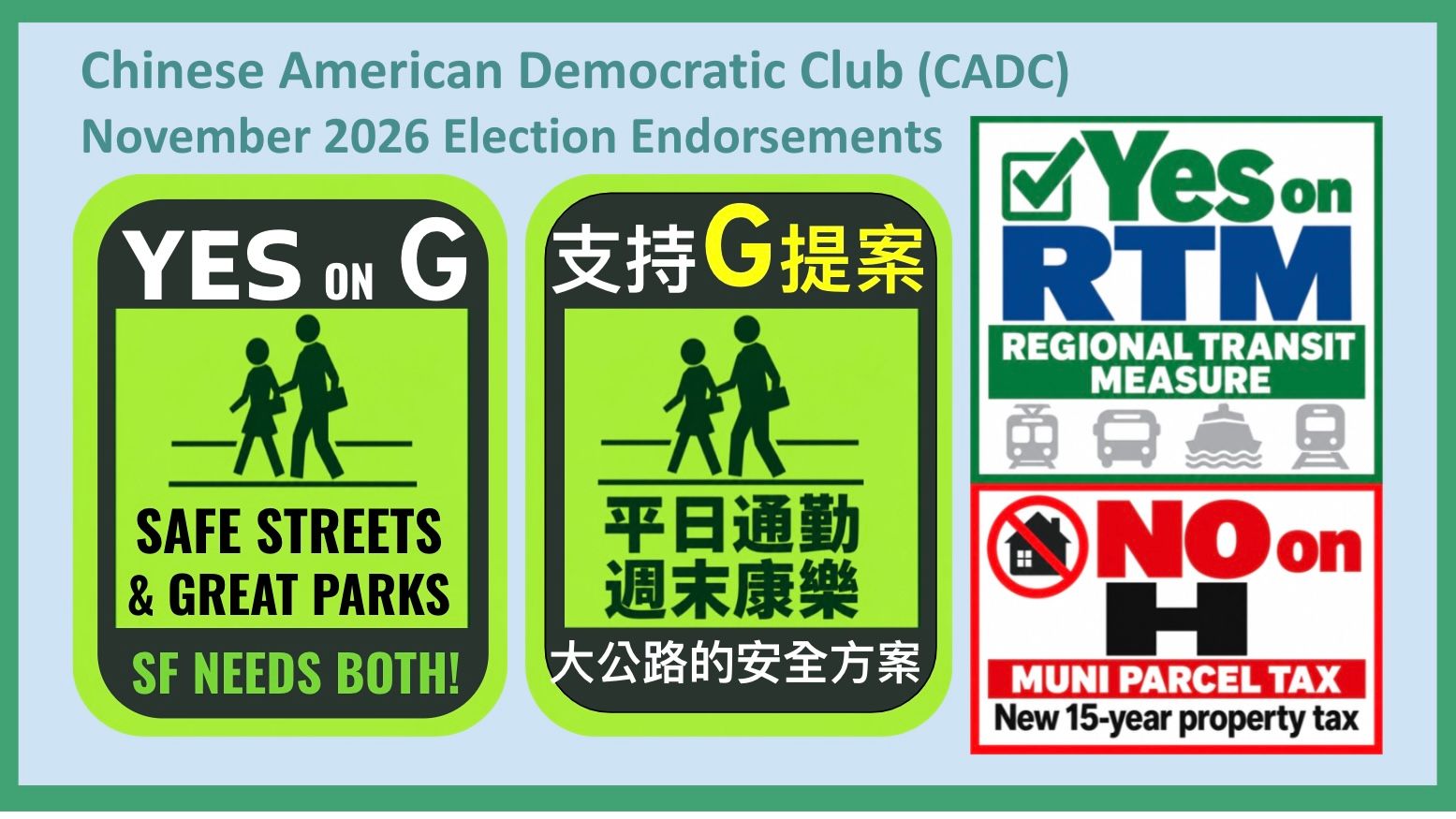
Chinese American Democratic Club: Vote no on Prop H and yes on RTM
The Chinese American Democratic Club (CADC), the oldest affiliation with the Democratic Party for Chinese Americans in the nation established in 1958, opposed Prop H.
"Creates a 15-year parcel tax projected to generate approximately $160 million annually for Muni operations, with different rates for residential and commercial properties and limited pass-throughs to some rent-controlled tenants. CADC opposes Prop H because San Francisco voters are simultaneously being asked to approve a regional transit sales tax that would also provide substantial new funding to Muni," CADC wrote in its rationale.
"The committee believes SFMTA should demonstrate greater cost control and accountability before property owners and some renters are asked to shoulder another dedicated tax, particularly one that increases with inflation," CADC said.
CADC endorses Regional Transit Measure. "Imposes a 14-year regional sales tax—1% in San Francisco and 0.5% in Alameda, Contra Costa, San Mateo, and Santa Clara counties—to fund transit operations, including Muni, BART, Caltrain, and other Bay Area transit services. CADC supports RTM because public transit needs stable funding to maintain essential service, therefore, a broadly based sales tax spreads the cost across the general population and is more equitable than Prop H which primarily places the transit-funding burden on property owners," CADC stated.
Mark Gin, President of the newly-established Business League, filed an argument with the City's Department of Elections to oppose Prop H. "We support Muni. We want safe, reliable public transportation. But another long-term parcel tax is not the solution to SFMTA's financial problems," Gin wrote.
"Proposition H would create a 15-year parcel tax, beginning in 2027, with rates adjusted annually for inflation," Gin said. "San Francisco home homeowners, property owners, small businesses, working families, and renters are already struggling with one of the highest costs of living and doing business in the country. Another long-term tax adds more financial pressure to our city."
Many leaders and members of San Francisco's Chinese community strongly oppose Prop H. While they lack campaign signs to voice their opposition loudly, they use their own channels, including popular social media platforms like WeChat, text messages and daily verbal conversations, to pass information to many more others.
Ed Siu, Founder and President of the Chinatown, Sunset and Ocean Avenue Merchants United Association of San Francisco, has publicly opposed Prop H. "We are not against Muni. We understand that Muni is essential to San Francisco. Our seniors, workers, students, residents, visitors, customers, and businesses all depend on a reliable public transportation system."
"But supporting Muni does not mean giving SFMTA another 15 years of taxpayer money without first demanding accountability, transparency, and better management," said Siu. "It is about our actual experience working with the SFMTA. Look at Ocean Avenue.“
"Our merchants questioned whether taking away a general traffic lane and converting it into a red transit lane was justified by the approximately three-minute transit-time benefit being discussed," Siu said.
Although complaints have poured in from merchants and residents across the city for almost a year now, Siu said the SFMTA has insisted on implementing the Public Transit Lane project starting in 2027.
Hazel Lee, a community leader in the Portola neighborhood, echoes her opposition to Prop H. Lee is the founder of a non-profit organization, a former restaurant owner and a property owner of a mixed-use property along San Bruno Avenue in the City.
"I have seen the SFMTA remove parking spaces on San Bruno Avenue without consulting merchants and the community, only to make it easier for Muni buses to stop and pick up/drop off passengers," said Lee.
"The SFMTA has mismanaged its budgets by adding more bike lanes, right turn lanes, and bus lanes, and by ignoring the needs of general motorists who represent a larger portion of people sharing public roads. Those special lanes cost money and create traffic jams. They don't represent our roads are safer, " said Lee.
Lee is a property owner of a mixed-use building with a Chinese restaurant on the storefront level. Under Prop H, Lee needs to pay an extra parcel tax with a base tax of $799 plus inflation adjustments for the next 15 years.
Lee is retired and relies on her retirement income. "Where else can I come up with extra income to cover the $799 property tax for the next 15 years? Will I have any choices other than raising the rent for the small Chinese restaurant at our storefront? Prop H hurts everyone."
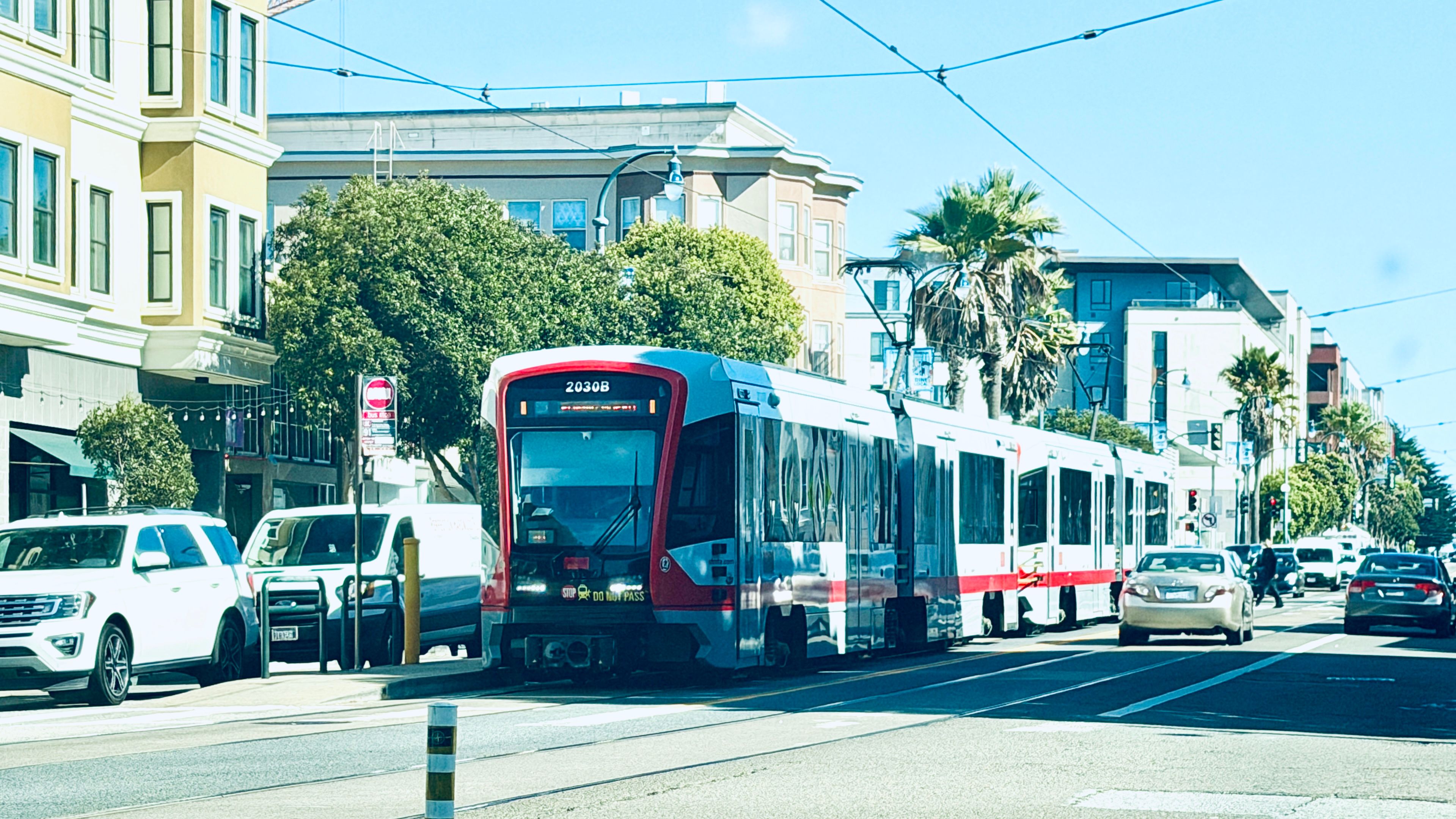
"Under the City's structure, the SFMTA has been allocated funds to operate. Why does the SFMTA keep overspending on unnecessary items and ask property owners to take the burden?" Lee said with frustration.
Ann Li and her husband have co-owned a property in Nob Hill close to Chinatown for over four decades. They operate a small convenience store on the street level of their mixed-use property, serving neighborhood customers.
If Prop H passes, $799 plus inflation will be added to their property tax. "We have nowhere to pass on this new tax from Prop H. We are both the property owner and the business owner. It is no secret that business in San Francisco has been so slow in recent years. Not all property owners are rich. Why does Prop H only target property owners? How can we survive?" Li said.
Lily Yang, her husband and family members run a small Chinese restaurant in the city and reside in the Outer Mission neighborhood. Her three children are now in middle school, high school and college. Yang and her husband will vote against Prop H in the election.
"We have been struggling to pay the mortgage for our home, rent for our restaurant, tuition for our son and saving money for two younger daughters for college soon," said Yang. "The 15-year tax from Prop H is truly a big burden for us. Why are only property owners forced to contribute to the SFMTA? It is not fair."
David Lam, a young software engineer born and raised in San Francisco. He rents an apartment with friends and also opposes Prop H.
"I have been in the high tech industry for 6 years and dreamed of being a homeowner one day," said Lam. "I can't believe I'll have my dream come true in the next few years."
"I am not a property owner, but my parents are. My parents are first-generation immigrants. They worked very hard to buy their home. Anticipating a future rent increase for me because of Prop H, I think it will make it harder for me to buy a home in San Francisco, maybe somewhere else," said Lam. "Prop H hurts San Francisco from all perspectives. People like me will probably leave the City."
Lam studied both measures, RTM and Prop H. He wonders why San Francisco is creating another parcel tax and asking only property owners to pay more, while SFMTA will receive an extra 1% sales tax revenue and other counties only a 0.5% raise under the RTM measure. "Why does SFMTA need that much extra money? It doesn’t make sense to me," Lam said.
Yes on H campaign: 61% of Chinese respondents support Prop H in a poll
Yes on Prop H campaign spokesperson Maxwell Szabo replied to Wind Newspaper's inquiry that no data has shown the Chinese community overwhelmingly opposes Prop H.
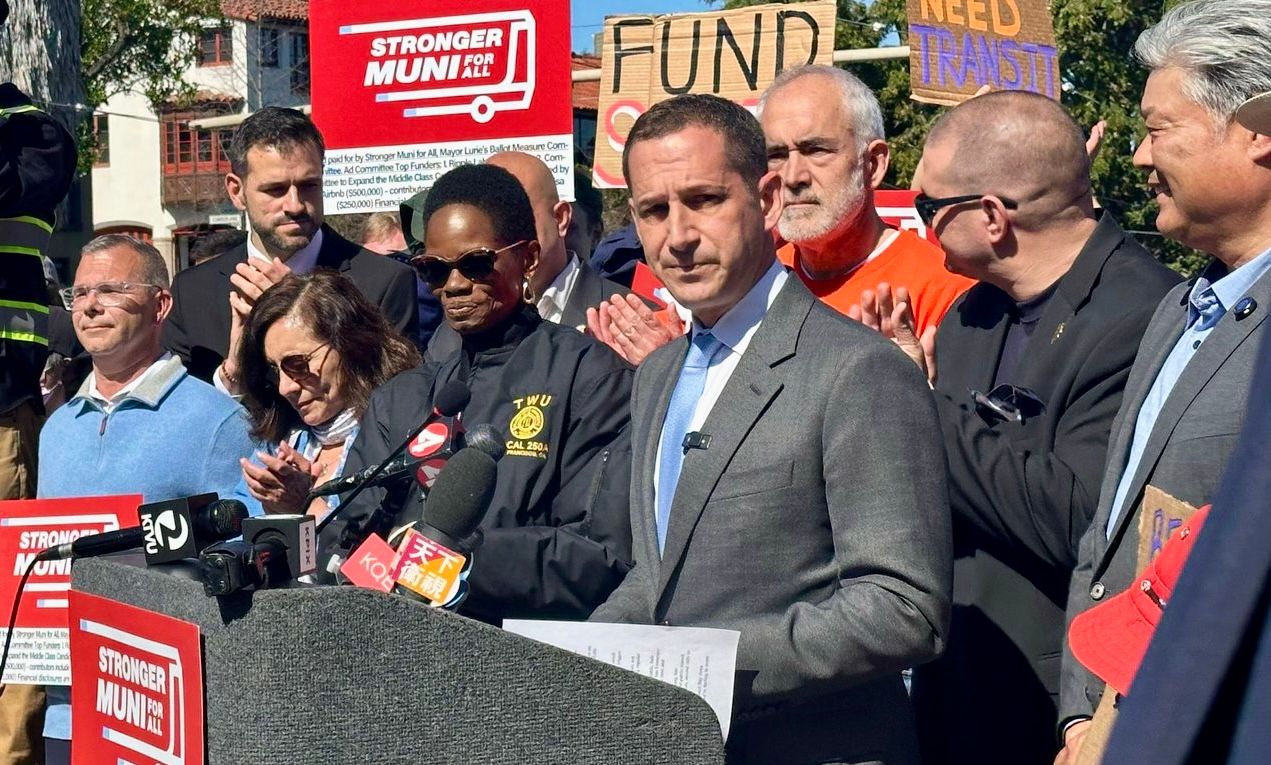
Szabo quoted recent poll results on Prop H. "Recent polling shows Chinese voters are overwhelmingly supportive by a nearly two-to-one margin, with 61% in support to 33% opposed (Survey of 600 conducted October 13 to 19, 4% margin of error)."
Mayor Lurie responded in a statement and said, "San Franciscans and our Chinese community overwhelmingly support Proposition H because it helps get 14,000 SFUSD kids to school every day, supports our seniors, and brings customers to our small businesses."
"My administration is holding the SFMTA accountable to our communities, and we have made more than $170 million in cuts through various efficiencies and cutting over 500 positions. Proposition H has strict accountability measures that ensure every dollar goes directly to Muni and nothing else," Lurie stated adding that the city also doubled fare inspectors to crack down on fare evasion. "Reform is already underway."
"Property owners aren’t the only ones paying for Muni. Riders pay fares, the city contributes general fund dollars, and the regional measure on this same ballot is a sales tax that the entire Bay Area will pay. Prop H is one piece of a shared solution," Szabo added..
About 75% of the tax revenue from Prop H would be generated by commercial properties while only 25% comes from homeowners, according to Szabo.
"The City Controller’s independent analysis found that the economic cost of Muni service cuts would clearly be larger than the cost of the tax, including the effect on property values," Szabo said.
"The deficit isn’t a product of runaway spending. It’s a structural funding problem: Muni receives no state or federal funding, and relies on revenue sources that never fully returned after the pandemic," Szabo clarified.
- Chinese community members say Prop H unfairly makes property owners pay for San Francisco public transit’s shortfalls
- Opinion: City College opened doors for my family. Let’s keep them open.
- Opinion: Share the Great Highway. Keep San Francisco inclusive. Yes on G.
- A pre-election national AAPI poll: More AAPI adults trust Democrats over Republicans in handling issues
- Voters in 5 counties of the San Francisco Bay Area to decide whether to raise the sales tax by 0.5% or 1% for 14 years to fund public transit
- Opinion: A voice for every community and the next generation of San Francisco
- Opinion: Let’s vote yes on 5-county Bay Area regional measure and San Francisco Prop H for clean, safe, and reliable public transit!
- California leads in dedicating September 25 as annual Dolly Parton Day in honor of the American icon’s legacy of love