San Francisco Independent Media Coalition hosts Congressional candidate forum to discuss issues of Great Highway closure, immigration policy, wealthy tax, AI regulations, and more

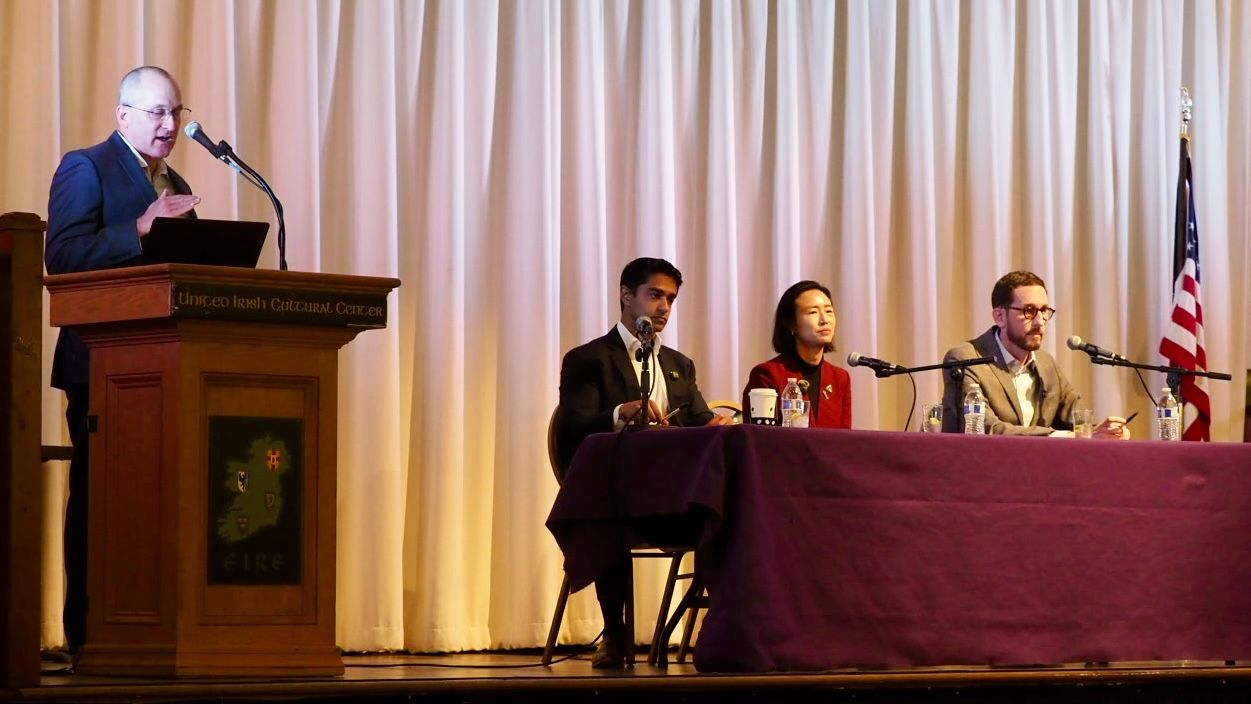
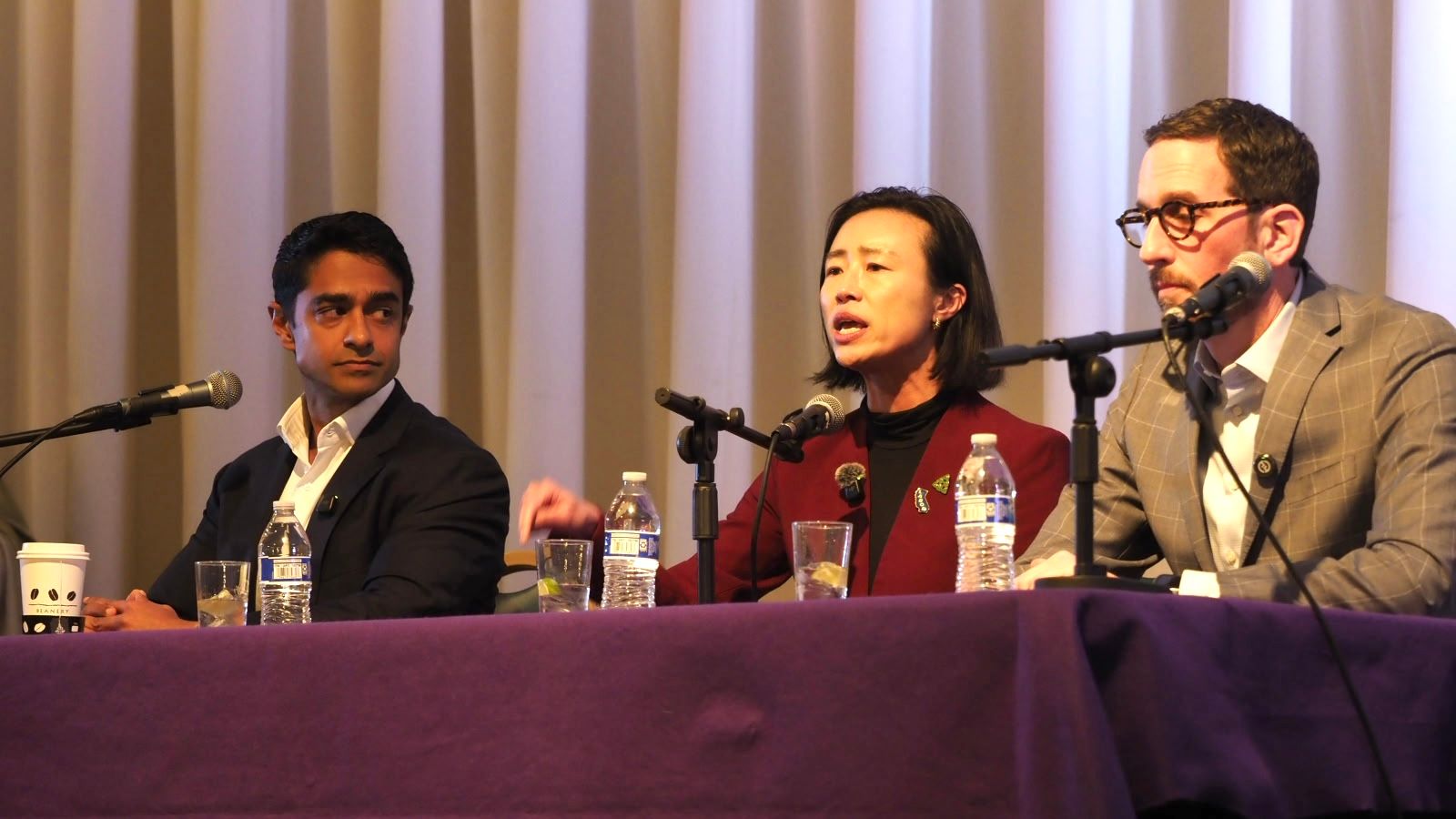
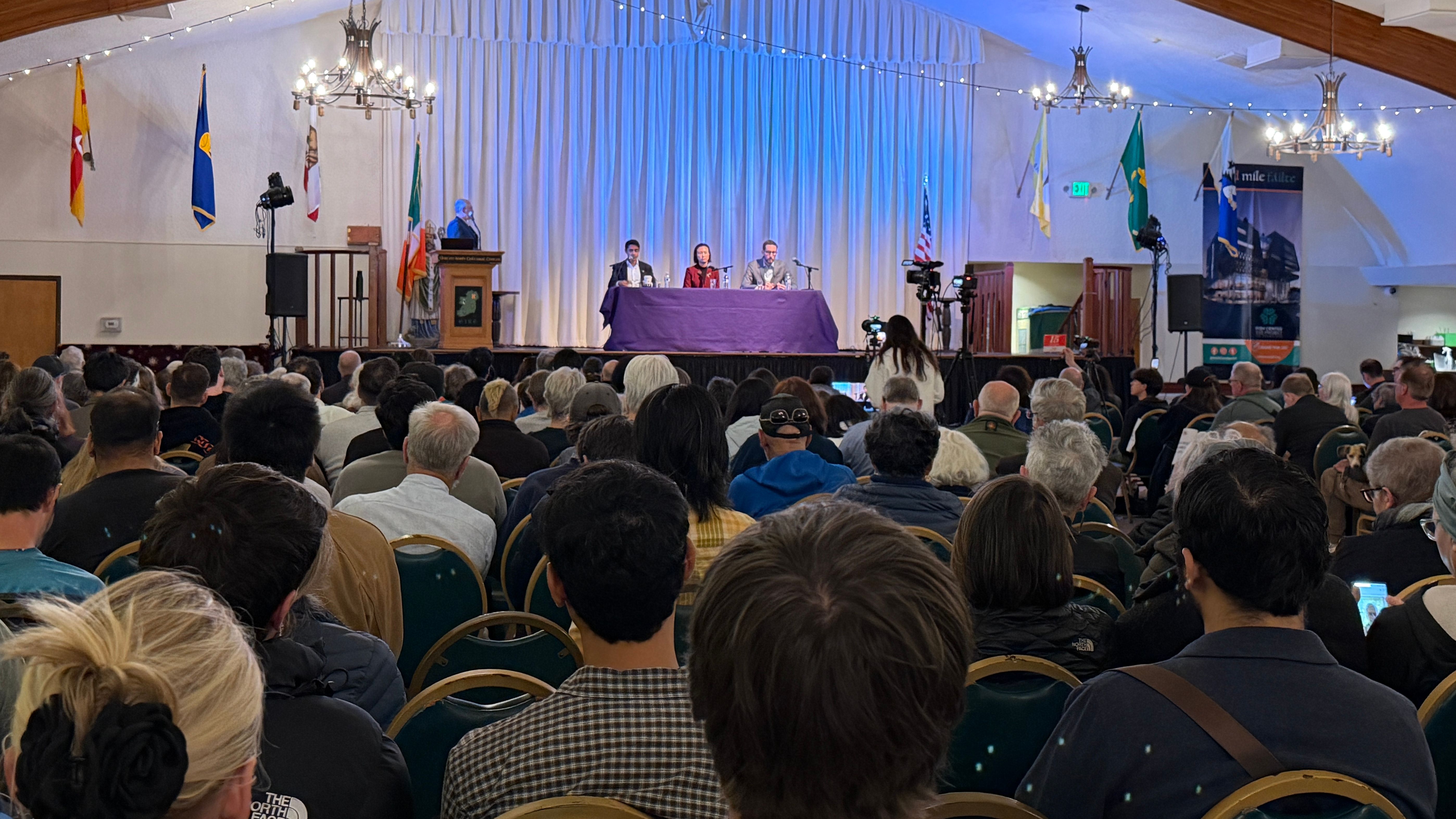
SAN FRANCISCO - The San Francisco Independent Media Coalition presented its first ever candidate forum on April 15 to invite three 11th District Congressional candidates, California State Senator Scott Wiener, San Francisco District 1 Supervisor Connie Chan, and Former Chief of Staff to New York Congresswoman Alexandria Ocasio-Cortez (AOC) Saikat Chakrabarti, to answer questions from the news media members of the Coalition. Three candidates highlighted their differing positions on issues including Great Highway closure, immigration policy, wealthy tax and Artificial Intelligence (AI) regulations.
The coalition was first established in 2020; Wind Newspaper was one of the nine founding members. Other founding members were Ingleside Light, 48 Hills, Bay Area Reporter, Broke-Ass Stuart, Richmond Review, Sunset Beacon, El Tecolote and San Francisco Bay View. All founding members of these newspapers are based in San Francisco to serve local neighborhoods and the diverse ethnicities including Asian/Chinese, Black, Hispanic, and LGBTQ communities.
The Journalism Project at the non-profit Common Cause of California has led the Coalition since 2022, bringing in more members including the San Francisco Public Press, Mission Local, Nichi Bei News, and the Jewish News of Northern California.
The Coalition is an alliance of San Francisco-based independent media outlets that directly serve local neighborhoods and ethnic communities across the city. Together, the coalition's member publications reach hundreds of thousands of San Francisco residents in multiple languages.
It was the first time the Coalition held a candidate forum allowing local voters to learn more about the candidates competing for the position of House Representative to represent San Francisco in Congress in January 2027..
The forum took place at the United Irish Cultural Center in the Sunset District on April 15 and offered free admission to the public.
Ben Trefny, Executive Producer of KALW Radio in San Francisco, moderated the candidate forum. Trefny is the past President of the Society of Professional Journalists (SPJ) Northern California Chapter.
The Congressional candidate forum was sponsored by All American Medical Group (AAMG) and MG Stone Work Company. Both sponsors are business entities owned by Chinese Americans.
"This event is meant to center questions that matter to San Franciscans — asked by the reporters who cover your neighborhoods, your communities, and your daily lives," noted Jesse Garnier, Professor in the Journalism Department at San Francisco State University and event coordinator of the candidate forum.
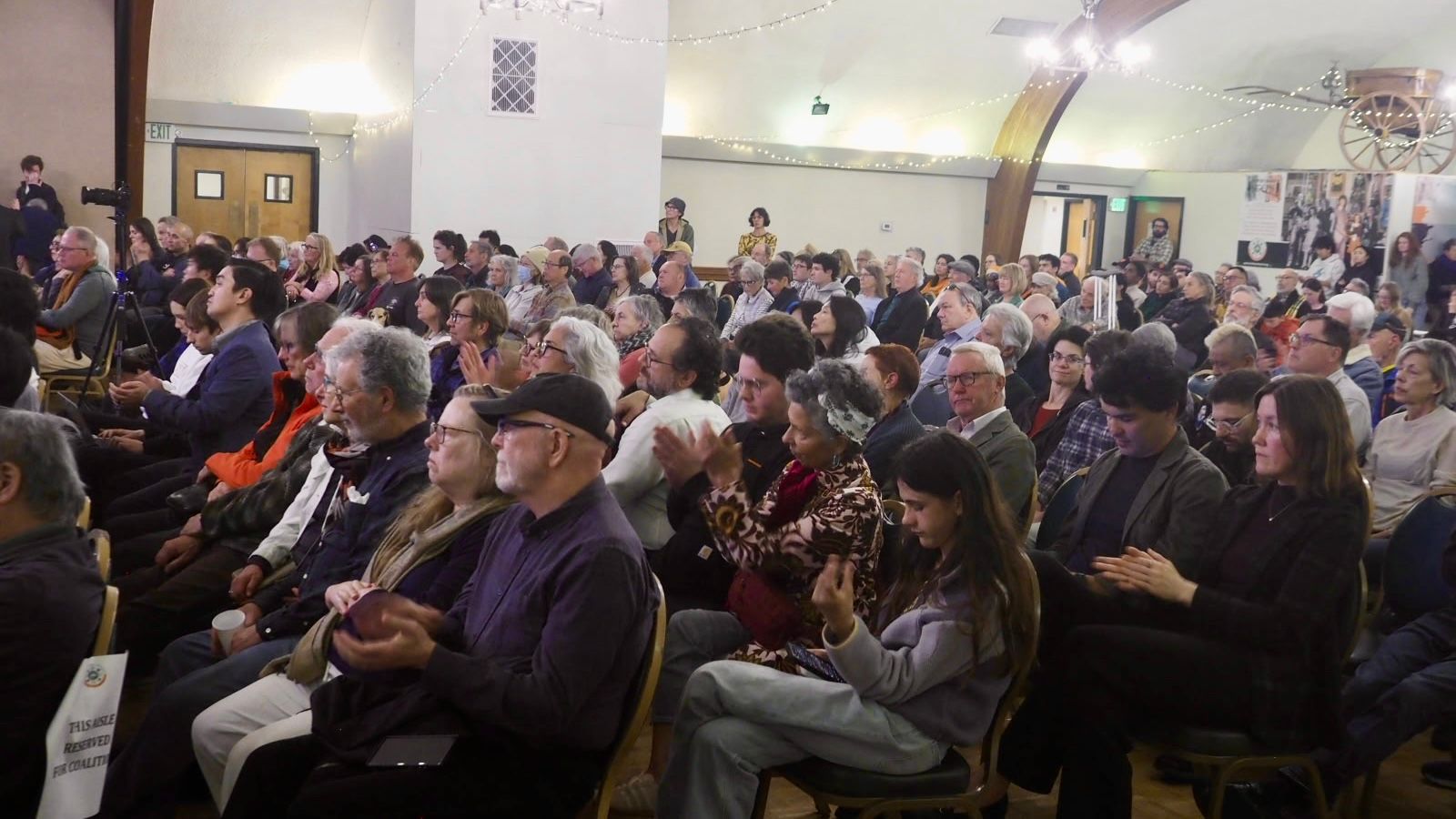
The Coalition's first candidate forum was a packed event with 250 people attending. The full recording of the forum can be watched on the Coalition's website at sfindependentmedia.org.
The primary election for the 11th District House Representative will be held on June 2 to fill the seat left by Nancy Pelosi who will not seek re-election after her current term ends in January 2027. The top two candidates in the primary election will advance to the runoff election in November which will determine the final winner.
Three major candidates running for that House position who participated in the forum were California State Senator Scott Wiener, San Francisco District 1 Supervisor Connie Chan and former Chief of Staff to Rep. Alexandria Ocasio-Cortez (AOC) Saikat Chakrabarti.
15 participating members including Wind Newspaper submitted questions for the forum. Wind Newspaper selected five of those questions with answers from three candidates to publish in this issue. The selected questions and answers were more relevant to the Chinese and Asian communities in San Francisco.
The answers from candidates are based on the forum transcript. Wind Newspaper edited the repeated wording in the answers to make them more concise for reading without changing their meanings.
______________________________________________________________________________
Moderator: The SF independent media coalition is an alliance of local neighborhoods and community publications that represent the grassroots voices of San Francisco. Some of whom have been here for over half a century or more, others are newcomers representing the rise of hyper-local digital media and its many constituents. But all are completely independent and based in the city, dedicated to keeping local news alive.
We will ask questions which directly affect readers from all backgrounds and areas. This is an event focused on the candidates and the questions from the San Francisco Independent Media Coalition.
Self-Introduction:
Chakrabarti:
The problems we face now are monumental. Authoritarianism, potential World War III, the cost of living crisis that is still crushing San Franciscans, and politics as usual is not going to solve this. We have to change the system and I am running because that is possible now.
There are people running across the country going up against the establishment because this is the culmination of a movement that started with Bernie in 2016 where I served as the Director of Organizing Technology. I started Justice Democrats to primary corporate Democrats at a time that nobody else would and we got the squad elected.
I ran AOC's first campaign as her Chief of Staff in Congress. I led the creation of the Green New Deal, which led to the largest investment in climate in history. So I can tell you D.C. is not like Sacramento where Democrats run everything. I am the only one here who turns the ideas into results in Washington. To do it, we have to take on not just Republicans, but corporate money and we have to change Democratic Party leadership. I am the only one here willing to do that.
(Editor's note: The original "Squad"—Alexandria Ocasio-Cortez (NY), Ilhan Omar (MN), Ayanna Pressley (MA), and Rashida Tlaib (MI)—was elected in 2018 following Donald Trump's 2016 election. These four progressive Democratic congresswomen, all women of color, rose to prominence, often drawing criticism from President Trump. The group expanded in 2020 and 2022 to include others like Cori Bush and Jamaal Bowman. Source: Wikipedia)
Chan:
Just last week as your Budget Committee Chair, we held a budget hearing demanding answers from Blue Shield when they denied cancer treatments to our retired firefighters and retirees. We demand answers to make sure we have care for those who have contributed to our city and that is the fight that we have to continue not only in SF, but all the way to Washington D.C. I have fight this fight with you together.
We make sure that when Trump cuts our health care, we put $400 million on reserve to safeguard that cut. When Trump cuts our education, we make sure that in San Francisco, we still work and do everything we can to have affordable child care, fully funded K through 12 classrooms, and free city college. When Trump cuts our food security, we make sure that we support our community. And this is why we are the only candidate endorsed by teachers, nurses, and firefighters. And with that together with the working people, we are going to fight this fight and we are going to win.
Wiener:
In the next member of Congress, San Franciscans want someone with the right values, with a backbone of steel, with the ability to get things done, and someone who will challenge the status quo and break glass because the status quo is broken. I have done that my entire time in office and I am the only candidate who has not just talked about challenging the establishment, but has actually gotten it done beating some of the most powerful forces around.
I helped build and lead a movement to completely change how we approach housing in San Francisco and California. We broke glass to do that. I have challenged some of the most powerful corporations in the history of the world and the health insurance corporations to force them to cover more mental health. We have gone up against the big tech companies and beaten them on AI safety. When establishment Democrats have said back away from trans people, I have said, "Hell no, we are going to continue to protect marginalized communities." I will take that tenacity and that fight and willingness to break glass to Congress.
Question 1 from the San Francisco Bay View, San Francisco's black newspaper covering Bayview Hunters Point and black communities since 1976
San Francisco Bay View: What makes community journalism important and will there be a commitment to regular on-the-record engagement with neighborhood and ethnic media, including the San Francisco Bayview, and responding seriously when those outlets raise documented concerns that larger media ignore?
Chan:
Absolutely. As a legislative aide to former Supervisor Sophie Maxwell, who actually really represented the Bayview of the Valley, we saw what happened with the Mirant Power Plant and Bayview Hunters Point. All these really impacted the Black and Brown communities living in District 10. As an aide under her leadership, we shut down the power plant. But we knew that we could have done it if it was not for a publication like Bayview and making sure that we kept elected and community leaders accountable to deliver clean up at the navy site. But even after we shut it down, we needed to have investments in transit, housing, and jobs. All those things are because journalism and continuing reporting so that we can hold people accountable, including the federal government.
Wiener:
Community media is unbelievably important, particularly in the era of massive consolidation of media and we have seen how that's played out with Trump, with ABC and CBS, and all of these conglomerates that are bending the knee and basically becoming state media. Local and independent community neighborhood newspapers play an essential role, and we have to support them. We have done that in the legislature through funding. We have to continue to do that. I will always have an open door as I have through my entire time in office. I put op-eds in our local papers, return calls. We will always be available.
In Bayview in particular, this is a part of our city that has been neglected for far too long by our city government, disinvestment, contamination, and the lack of a grocery store. I have taken the tea all the way to the end many times, and it is shocking how long that takes. There are real issues that have not been adequately addressed, and local neighborhood-based media is an essential form of accountability.
Chakrabarti:
Community journalism is a vital part of how anybody gets informed of issues, because the community journalists are the ones who are on the ground actually seeing the issues. Especially in a community like Bayview that's so often overlooked. I'll absolutely be open and have on the record conversations with community journalists.
In our campaign, we have made extreme efforts to make sure we are in the Bayview. There are issues around environmental justice and toxic waste in Bayview that have been ignored for a long time. In Congress, I will make sure that we will not do any sort of development in Hunters Point until we clean up the nuclear waste there.
When I worked in Congress previously, one of the major things we were proud that we got through from the Green New Deal into the Inflation Reduction was this idea of environmental justice, of places that have been redlined or have been left behind getting funds first. Because of those efforts, Bayview directly benefited. We had hundreds of thousands of dollars of grants that came into Bayview for clean air and clean water monitoring systems.
As a member of Congress, I will continue to hold regular town halls, talk to all community media, and make sure that community media is fully funded because it is an essential part of how anyone knows anything about the city.
Question 2 from Wind Newspaper, an English and Chinese bilingual news publication based in San Francisco covering the Asian and Chinese communities since 2020
Wind Newspaper: Do you support the proposed Billionaire Tax Act targeted for the November 2026 ballot which would impose a one-time 5% tax on individuals with over a billion dollars in assets? And do you support San Francisco's Prop. D in the upcoming June election to collect a top executive tax when top executives earn more than 100 times the median pay of their employees?
Wiener:
As I stated before, I do not support Prop D. I have been an advocate to raise the state corporate tax and to reverse the Trump corporate tax cut. I think that's important. But downtown San Francisco and Union Square have not even come close to recovering. In my view, now is not the time to do a major business tax increase in San Francisco. I have supported wealth taxes and income taxes on high earners.
That measure (Billionaire Tax Act) has not qualified for the ballot yet. I do have concerns about a one-time tax with a cliff at the end of it. We need stable tax revenue over time. That should be progressive taxation. It can be a wealth tax, or an increase in income taxes on high earners. One-time tax with a cliff at the end is not stable taxation.
Saikat:
I strongly support both of those. Trump just gave massive tax cuts to the billionaires that would be expected by this wealth tax. He also gave a massive tax cut to the corporations that would be affected by the Overpaid CEO Act. The least we can do is try to claw back some of that money to fund the essential public services that we have in San Francisco and California. But this is of course a problem that predates Trump because inequality in this country has been rampant for a long time.
For me, this is personal. When I first was in San Francisco, I worked in the tech industry for a little bit. Because I ended up working at the right company at the right time, I ended up making a lot of money. That was a profoundly eye-opening experience because I don't come from money. I grew up middle class going to Texas public schools. My parents grew up poor in India. They were refugees during partition.
I worked hard, but I didn't work harder than a teacher or a nurse or the janitors cleaning our offices that did every day. It shouldn't be the case that you have to win a lottery just to be able to afford a home or secure retirement. The only way to do it is to rectify this tax system. We've transferred $79 trillion from working people to the richest over the last several decades. That's why I have been calling for a wealth tax on billionaires and centimillionaires since the start of this campaign. Are we going to continue the wealth consolidation and the power consolidation into the hands of a few? Or are we going to take our economy back and rectify it and make an economy that works for working people?
Chan:
Yes and yes. People say it is not the right time or they will leave. Let me tell you what happened as your Budget Committee Chair. In 2022, the Controller projected the overpaid CEO tax revenue will be roughly about $60 million. At the end of that fiscal year, we ended up collecting $206 million from that tax revenue. That was during some of the toughest times for all of us. Our restaurants and salons couldn't open. People have to wear masks 6 feet apart. People were losing jobs and unemployment. That is going to happen again when we make sure that the billionaires and their companies pay their fair share.
Trump already gave away billions of dollars of tax breaks to these billionaires. Now he is putting $1.5 trillion into the defense funds. That is $1 billion every day in the Iran war. We cannot accept that. We must fight that and have to start with San Francisco.
Question 3 from the San Francisco Public Press, a non-profit investigative newsroom producing deep dive reporting on housing, government and public safety
San Francisco Public Press: State and federal regulation of artificial intelligence is important to our readers and listeners. What is your policy proposal for federal regulation of AI independent of what the AI companies themselves are proposing?
Wiener:
This is incredibly important. I am proud that San Francisco is the beating heart of AI innovation. AI has the potential to make life better in many ways, whether it is curing diseases, helping us solve climate change, helping us produce more food, so that we can deal with food insecurity. There are a lot of potential benefits. But it is a powerful technology. There are risks. We have to get ahead of those risks and not do what this country has often done, which is to ignore the risks.
There is no federal data privacy law in 2026. There is no federal social media law. We can't let that happen with AI. I have done this work in the legislature. It took me two years and a governor veto in between, but we passed AI safety legislation to address catastrophic risk. It is the leading law in the country. New York just replicated it. We need a federal law to deal with all sorts of deep fakes and misinformation, of course to deal with workforce impacts.
We see massive job losses. We have to get ahead of that and make sure we are understanding the risks and not just waiting for the bad things to happen. So that is work that we have done in the California legislature. We have a coalition of state legislators around the country who work together. There are more and more members of the Congress who are willing to challenge big tech companies as I have done and not just accept what they say and to get these regulations in place to make sure that AI is serving humanity and not vice versa.
Saikat:
The regulations we are seeing now are way too small for what we are facing. In California, it proposes $1 million fines per violation. That's what these AI companies are spending every 20 minutes. That is peanuts to them. This is not a question of regulation, but about control. Because with AI, we are seeing a technology that threatens to wipe out half of all of our jobs. Threatening to wipe out humanity itself. We are saying that a handful of CEOs should be able to make that decision for all of society? Why? That makes no sense.
We have to control this technology, so it works for humanity instead of racing to replace it. Labor should have a say in how AI gets introduced into a workforce. If there are all these productivity gains from AI, that should mean shorter work weeks and higher wages for workers, not workers getting replaced. It should mean that we actually take control of these data centers and treat them like public utilities.
The reason you don't see many Democrats talking about this is because AI lobbyists are spending tens of millions of dollars to buy elections all across the country. I have been talking about this since Day 1 in my campaign. Just today it was announced that the AI lobbyists are going to come after me in this race, too. So if you want AI that's going to fight for people and not just to further consolidate wealth and power into the hands of a few, that is what I am going to fight for and it is going to be a fight.
Chan:
There are two principles to regular AI. One is safety, to make sure that this technology is actually safe for all of us and consumers. The second principle should be not to take away jobs from workers. It is as simple as that. Based on these two principles, we create a federal framework to allow local control and local input. Similarly, we create a local federal framework to regulate things like Telehealth or AI in our healthcare system, or ChatGPT in our education system, or AI that is impacting our entertainment industries, performers and artists. These should be regulations that are very specific to the industry where the federal government provides a framework.
We knew what happened last December when we had a PG&E blackout. Waymo just stopped working and blocking our streets. Our firefighters and emergency vehicles could not get through. That was not safe and got to be halted. This is why I support Senator Bernie Sanders and Congresswoman AOC. They are actually legislating a moratorium to say no more data centers. I support that until we regulate AI because they don't get to experiment on our streets and on earth at the expense of our environment. We demand not only solutions, but also impact and benefits to our communities.
Question 4 from El Tecolote, a bilingual newspaper serving San Francisco's Latino community since 1970
El Tecolote: Senator Alex Padilla has announced his push for renewing immigration provisions of the Immigration Act of 1929. This would update the existing registry statue of the Immigration and Nationality Act in several ways. It would adjust the registry date to meet current circumstances so that an immigrant may qualify to apply for lawful permanent resident status if they have lived in the U.S. continuously for at least 7 years before filing an application. They do not have a criminal record and meet all other current eligibility requirements to receive a green card. Would you commit to supporting this effort and making it a top campaign objective and why?
Saikat:
Yes, I would support that and I have actually been calling for the years to be reduced to a 5-year time period that you have been in the country before you can apply. I believe that we have to completely change the conversation on immigration.
When my parents came to the country back in the 1970s, my dad got here with literally $8 in his pocket. The way he got here was back then that we were a country that had just had decades of wages going up. We had just put a man on the moon. We had built an interstate highway system. We were such an optimistic nation that we were bagging immigrants to come. And that's how my dad got here. We had these immigration offices all over the world that were recruiting people. A friend of my dad's took him to all these offices in Calcutta where the staffer pitched him on the American dream and got him to apply for a visa on the spot. A couple years later, he got it. It was so much easier to come to this country.
That is how we need to be treating immigration today. We need to welcome immigrants in this country. That means supporting legislation like Senator Padilla's. It means creating a clear pathway to citizenship as well for any undocumented immigrants who have been here who satisfy those same criteria. Ultimately, it is going to mean creating an economy that is optimistic again.
There is a reason why we were able to have that sort of welcoming mentality. During that time, people's lives were getting better. We were optimistic about the future of our country. That is ultimately what these next two and four years are going to be about. It is not enough just to defeat Trump. When we take power back, are we going to create a country where everybody's lives are getting better? Where do we go back to welcoming immigrants? That is how we expand social justice and include people. We have to have a positive vision of a growing economy that is inclusive of all to defeat MAGA. We can't compromise with them. We have to have a new vision and win on that.
(Editor's note: MAGA stands for "Make America Great Again", a political slogan and movement associated with Donald Trump's presidential campaigns.)
Chan:
Recently the Bay Area Council, a business focused organization, had a report about more than 2 million immigrants living in the San Francisco Bay Area. Out of which about 500,000 are undocumented immigrants. But collectively, if the Trump administration deports 500,000 undocumented immigrants, what it means for the Bay Area is that we will lose $67 billion of GDP and $8.4 billion of tax revenue. That's how immigrants are contributing to the San Francisco Bay Area and to the State of California to make it the fourth largest economy in the world. We got to support the immigrant community. We see what they have done and contributed.
Me as a first generation immigrant born in Hong Kong, came to San Francisco's Chinatown with my single mom and a younger brother. I am so grateful to be in San Francisco and to see how immigrants together have collectively built San Francisco. Not only that I support Senator's Padilla's legislation and committed to it as a campaign pledge, but also a commitment to see it through.
Last week the Asian Law Caucus and ACLU were in the Supreme Court arguing for birthright citizenship. We have to affirm birthright citizenship and naturalized citizenship because just about three months ago, Trump was going to go after those even with naturalized citizenship. We know it to be true that 15% of the population across the nation are actually undocumented, they can become citizens. They just don't have the legal means to do so. This is why San Francisco is great. We actually invest in legal defense funds. We need to do that at the federal level to make sure that we have a pathway to citizenship.
Wiener:
Yes and yes, it is critically important. We need to be very clear that immigrants make our country better and stronger and always have. And what's happening in this country now in terms of the complete denomination of immigrants and the terror campaign being inflicted on immigrant communities around this country, it is un-American. It has to stop and there has to be strong accountability for these extreme constitutional violations that they are inflicting on immigrants. Immigrants are part of the fabric of this country.
When my family came here, Jews from Eastern Europe and Russia fleeing pogroms where their villages were being burned down. They were being killed. They fled and came here like so many Jews did and arrived.
When I look at for example, folks who are coming from Central America fleeing violence, fleeing sometimes unraveling governments and going through that incredibly dangerous journey through Mexico to get here risking themselves and their families. They are doing it because they want better lives for themselves and their families. These are the people we want because they are going to make our communities better. It breaks my heart to see the terror that's being inflicted. So we need a pathway to citizenship. The Padilla bill is great. There are others, too. DACA (Deferred Action for Childhood Arrivals) is part of that. It is just horrific that there is still no pathway for the DACA recipients. We need to create a legal way.
Question 5 from Richmond Review and Sunset Beacon, two neighborhood newspapers providing local news and community coverage for Richmond and Sunset districts respectively for more than three decades
Richmond Review and Sunset Beacon: A key issue here on San Francisco's West Side is the ultimate use of the Upper Great Highway. The roadway was closed to traffic during the pandemic, alternated in use for cars on weekdays and pedestrians on weekends as a compromise soon thereafter, and then closed to automobile traffic after a citywide vote. Do you support keeping the roadway closed to cars every day as it is now, support the compromise open to cars during the week then closed to allow recreation on the weekends, or support allowing cars on the road every day as it used to be?
Chan:
I have a lot of feelings about that. Actually San Franciscans know where I stand. I am always about a compromise. Mayor Art Agnos taught and mentored me and said when it is civil rights, you go for the block, have your backbone, don't back down and fight til the end for civil rights. But when it comes to everything else, learn to find a way that actually delivers for the working people, find a solution and a compromise. That is really how I see the Great Highway. The Great Highway shouldn't be a divisive issue for the West Side and for the city if elected leaders actually had the backbone to come up with a solution and worked hard to make sure that we solved the problem first before we just went to the ballot and just closed it out.
Like just close it. It is ignoring the West Side and the needs of those that need to go to school, drive their kids to school, go to work and so much more. Without addressing traffic, there is so much that we should have done before we do that. A compromise is good because it could have been a just transition through that process. If the ultimate vision is to say we need to have a greener future, better environment, and get people off the car, and not drive, then invest in public transit. That is a direct solution to that problem. Closing a road does not give us that solution. What it does is it ends up dividing our communities. It is our job as elected to problem solve, provide a solution and not our job to actually divide the communities and then here we are. We end in a space that goes around and around instead of having a government that actually listens to the people and delivers the solution that actually works both for the West Side and the East Side.
Wiener:
I support the continued existence of Sunset Dunes, which is now the third most popular park in the City of San Francisco. In terms of listening to voters, we of course showed and the voters spoke and passed Proposition K. I supported Prop. K. I know a lot of people, including on the West Side, who did not. And I have had many many conversations and very much respect people's opposition to it. But ultimately, that is what I believe and it has been a successful park. I don't want to take that away.
I will also say that this is not the first time that we have gone through issues like this. When I first moved to San Francisco, it was shortly after the complete meltdown fight about the Embarcadero Freeway, whether to rebuild it or remove it. We chose to remove it and thank God. We now have the waterfront. After I got here, there were multiple ballot measures about whether to tear down the damaged Central Freeway in my neighborhood or rebuild it. Thank God we took it down because now we have Octavia Boulevard and Hayes Valley is just blossoming. We the voters spoke on car-free JFK, which is wildly popular, although that was also controversial. So I respect people's views on this, but where I come down is this is a successful park. I want to keep it successful. So many people love it. I support keeping the park intact.
Saikat:
I voted for Prop K. I supported the Sunset Dunes Park. However, I live in Duboce Triangle. I don't live on the West Side. Of course I enjoy the park, but I totally see how it has caused real inconvenience for folks on the West Side. I don't think this should have been a ballot proposition that was handed down and forced onto the residents of the West Side.
In my campaign, I am going all over the city to talk to folks about exactly these issues. We have done town halls in Richmond and Sunset. I want to hear about the actual issues from voters today because this is not how we built parks elsewhere in the city. Why should this have been something where everyone else forced this park onto you? So I am listening, I am learning, and I want to go with where the community actually wants us to go.
- Prop G gets a second chance for San Francisco voters to decide the fate of the Upper Great Highway in the November election
- 23 parking spaces during commute hours added in Chinatown amid 3 major renovation projects
- Asian supermarkets are booming in the San Francisco Bay Area with intense industry competition
- Architect Dartmond Cherk: Taking away this symbolic bridge would deflate the standing of the Chinese community in San Francisco
- Our Mission and Policy
- San Francisco: Kearny Street, between Clay and Washington streets, to be fully closed Aug. 1-2 and Aug. 8-9; Broadway Tunnel closed Aug. 15-16
- Carla Lee Hurley and Kirk Yin, 2 bilingual and community-oriented police officers, promoted to Captains in SFPD
- Over 15,000 signatures submitted, San Francisco citywide voters might have a chance to reopen Upper Great Highway