Opinion: Yet the Auxiliary Water Supply System has not been expanded, leaving ⅔ of San Francisco vulnerable to post-earthquake catastrophic fires
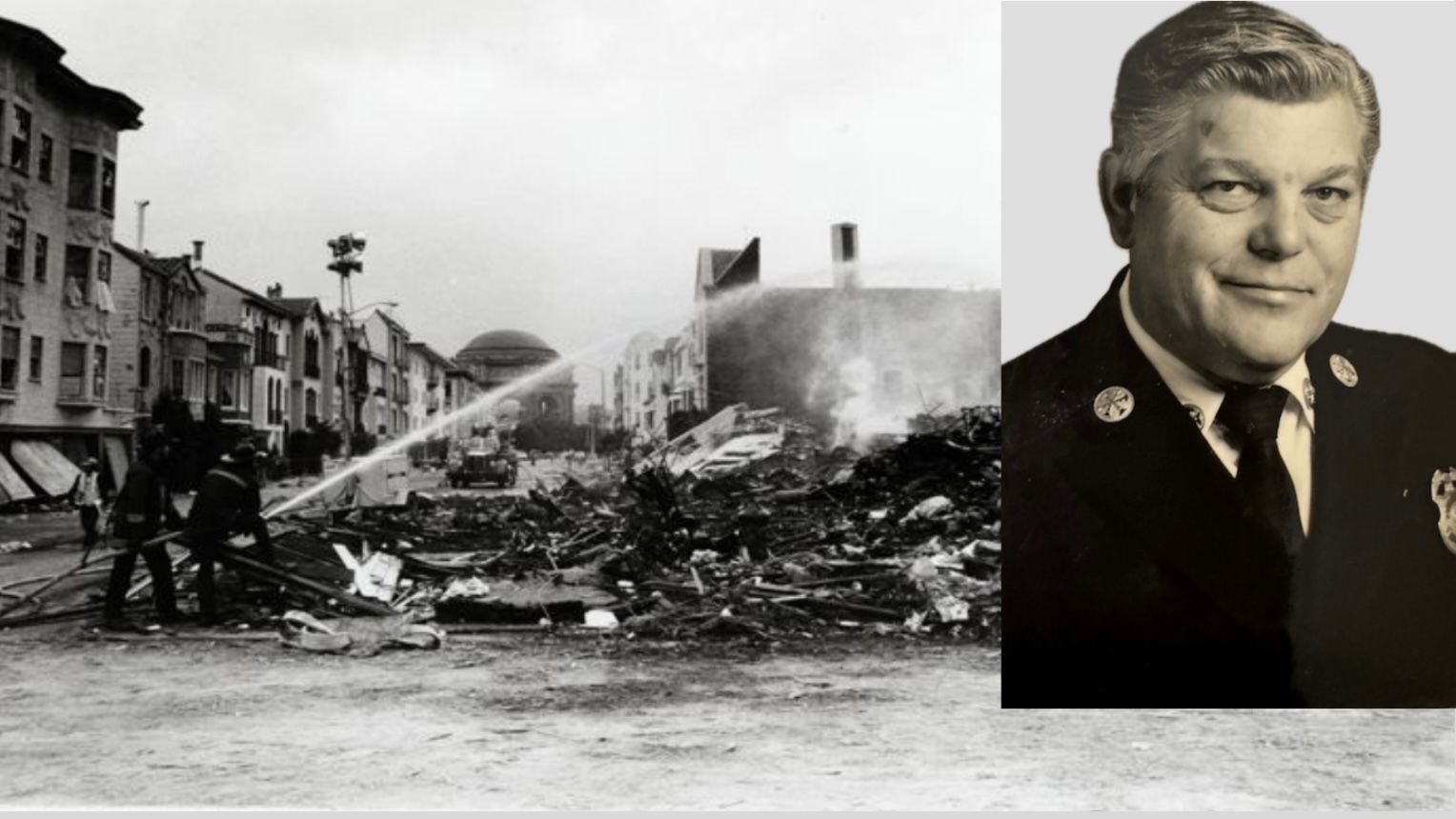
San Francisco lost a dedicated public servant in September, and I lost a good friend, whom I had known for many decades. Frank Blackburn was a retired San Francisco Fir Department (SFFD) Division Chief who had a huge effect on the City’s level of fire safety during his 35 years as a firefighter.
His invention of the Portable Water Supply System (PWSS) was credited with saving the Marina District from destruction by fire following the 1989 Loma Prieta Earthquake.
Frank always told me, when the “Big One” strikes, the survival of San Francisco will depend upon our ability to fight post-earthquake conflagrations.
In August 2021, Frank and 67 other retired SFFD veterans, including 31 retired Chiefs, signed an open letter to the Mayor and Board of Supervisors, stating that using the City’s unlimited and readily available supply of saltwater was the only viable solution to fighting post-earthquake conflagrations.
San Francisco Public Utility Commission’s (SFPUC) potable water alternative proposals are ludicrous and prone to failure.
Motivated by devastation of the post-earthquake fires in 1906, engineers armed with slide rules, pencils and paper designed and built the Auxiliary Water Supply System (AWSS) between 1908 and 1913, which covered northeastern portions of city where the majority of San Franciscans resided at the time.
More than 100 years later, residents now occupy every corner of San Francisco’s 49 square miles, and yet the AWSS has not been expanded, leaving two-thirds of the City vulnerable to post-earthquake catastrophic fires and conflagration.
There have been three voter-approved Earthquake Safety and Emergency Response (ESER) bond measures (2010, 2014, and 2020), a total of $312,000,000. Voters overwhelmingly approved expanding the AWSS.
Two Civil Grand Juries have been convened (2003, 2018). Both recommended expanding the AWSS and the Civil Grand Jury of “do it urgently.”
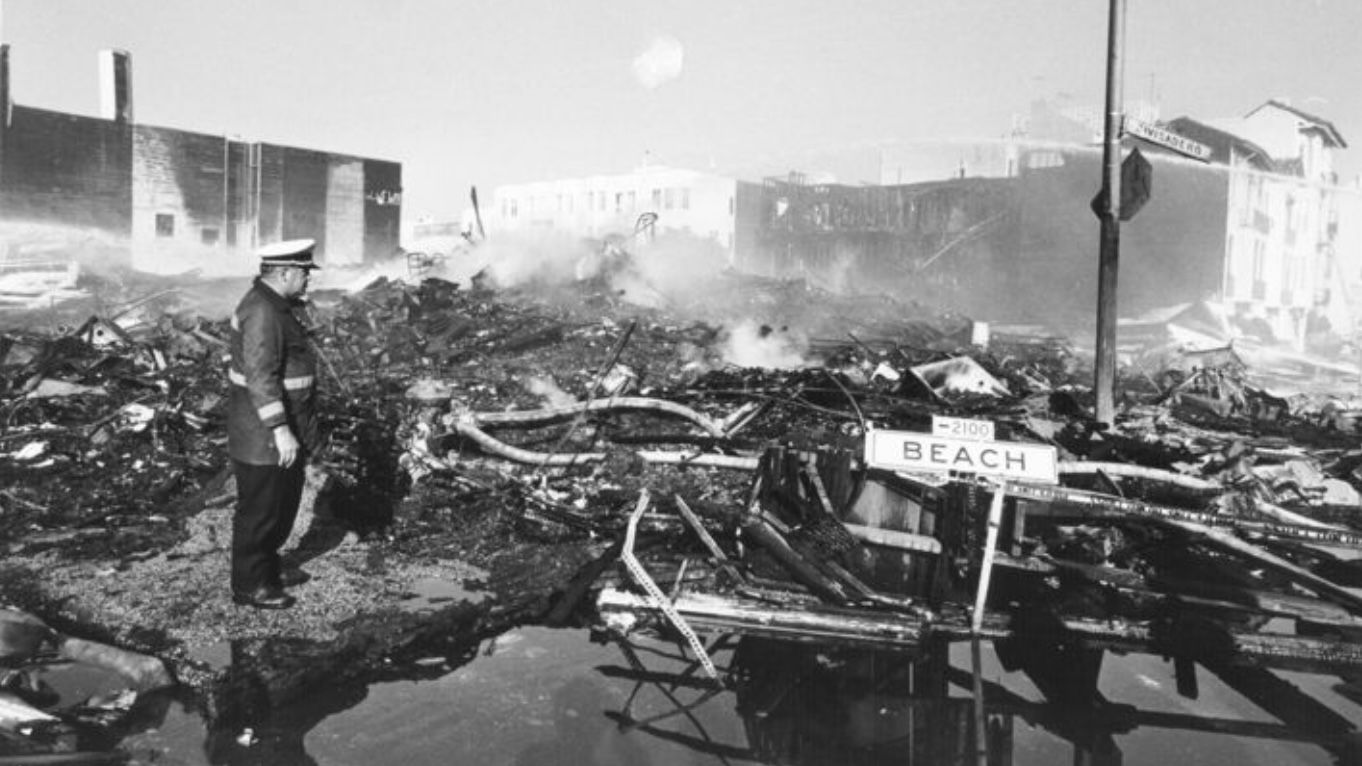
Armed with over $312 million and 15 years, the SFPUC has not installed a single hydrant nor a single mile of pipeline into unprotected neighborhoods. Clearly, SFPUC has no interest in providing the SFFD with what it will need in order to fight the estimated 70 to 120 simultaneous fires in the immediate aftermath of a major earthquake on the order of the 1906 temblor.
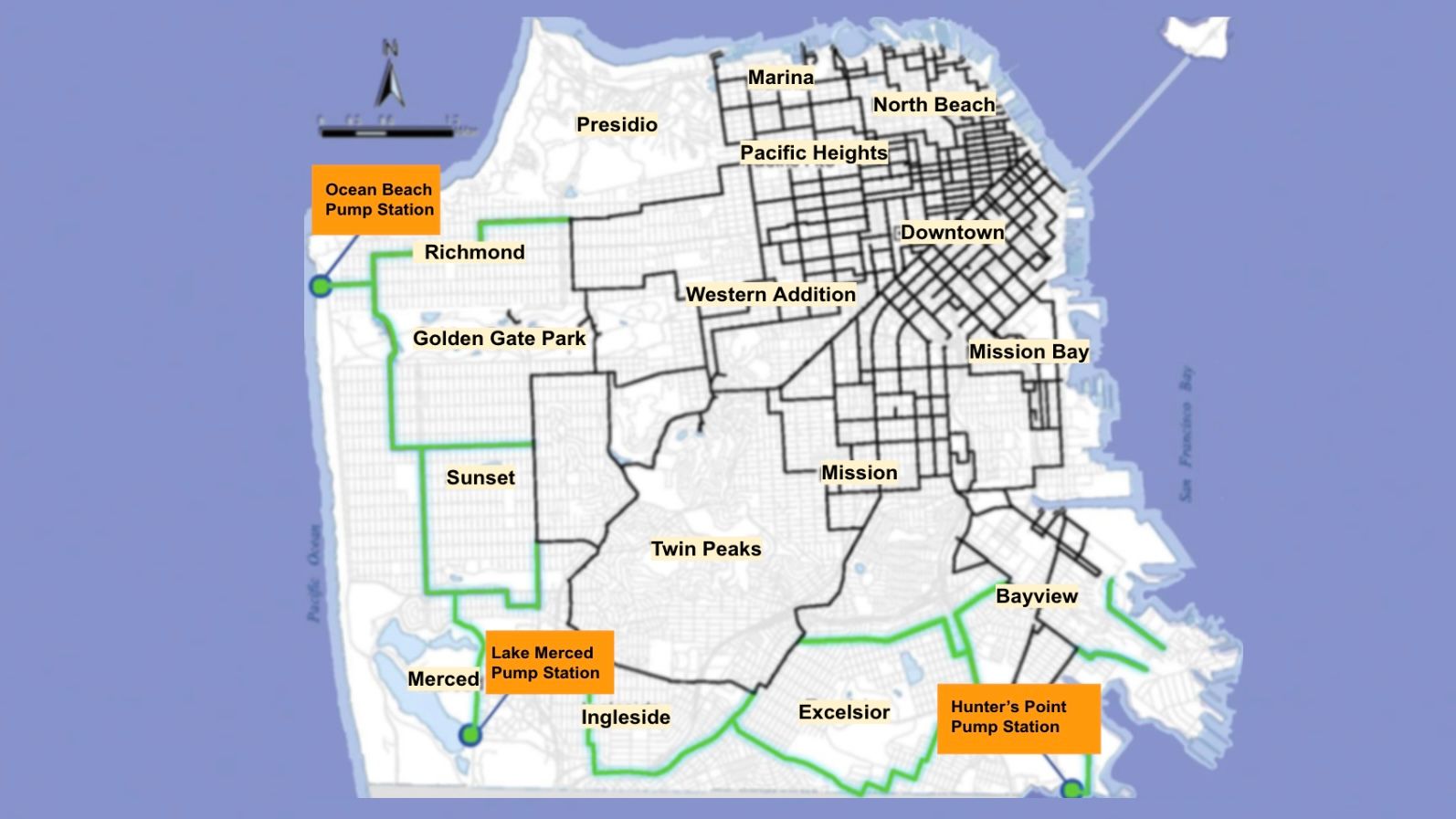
The SFPUC has avoided implementing a relatively simple solution, to copy the existing saltwater system on the westside and in the southern neighborhoods, by building a pump station at Ocean Beach, one at Hunters Point, and another at Lake Merced.
This would provide an unlimited supply of non-potable water to high-pressure hydrants that would be installed in these neighborhoods, where the building stock is 90% wood frame buildings – basically like very dry, densely packed, old-growth forests, from the standpoint of firefighting.
Instead, the SFPUC has produced a series of alternate, and often bizarre, plans to avoid the AWSS expansion.
In 2016, after six years of AWSS ownership, a high-level manager from the SFPUC appeared at a meeting of the Government Audit and Oversight Committee of the Board of Supervisors and stated that the Water Department staff had, after careful study, determined there was no need actually to expand the high-pressure hydrant system into the unprotected neighborhoods.
A better solution, he said, would be to purchase some 17 miles of large diameter hoses, which supposedly could be dropped from the back of flatbed trucks, driven by Neighborhood Emergency Response Team (NERT) volunteers, during the first hour after a major earthquake.
Further, he stated that the SFPUC would auction off, at scrap metal prices, millions of dollars worth of hydrants, pipes, and valves that the SFFD had stockpiled for its next AWSS expansion.
Fortunately, the Supervisors saw the folly of this plan and sent the Water Department representative back to his drawing board.
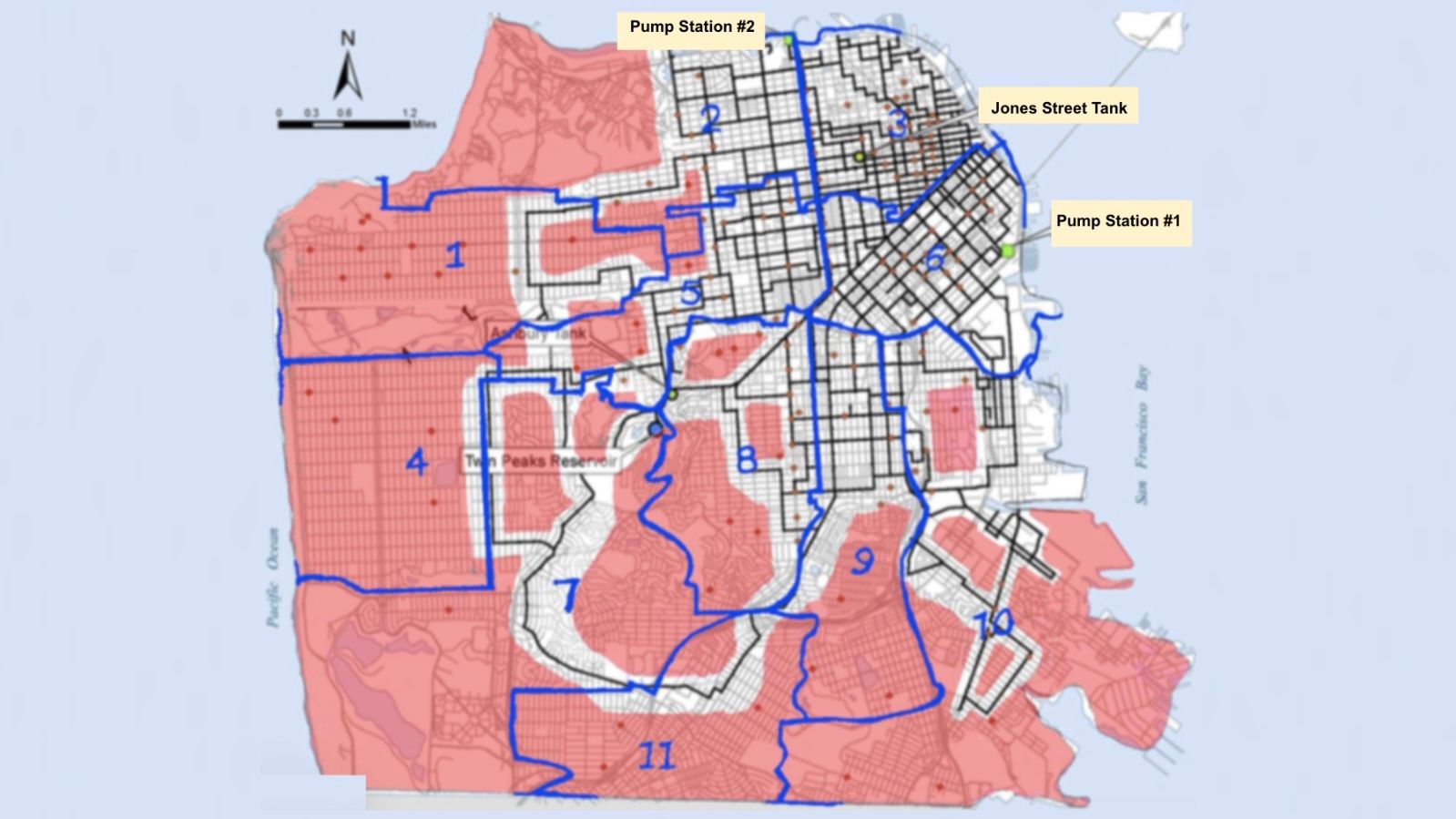
SFPUC staff next proposed to use drinking water from the 90 million gallons in the north basin of Sunset Reservoir to supply a limited hydrant system, but only for the Sunset District and Richmond District (south of Balboa Street).
When it was pointed out that this would be an inadequate amount of water to fight perhaps 30 post-earthquake fires in these two neighborhoods, and that using the City’s supply of drinking water to fight post-earthquake fires might leave the residents without water for sanitation and other human needs once the fires were extinguished, they once again, reluctantly, retreated to engage in more planning, but still only for the two westernmost neighborhoods. Our other 13 neighborhoods were apparently more than they could consider.
In 2018 a group of citizens filed a request with the Civil Grand Jury, asking for an investigation into the use of the ESER bond money and for an explanation of why the SFPUC seemed unable to execute a simple extension of AWSS.
The Civil Grand Jury report, issued in June 2019, stated that, as the voters had affirmed in 2010 and 2014 ESER bonds, the high-pressure hydrant system must be expanded into all 15 of the unprotected neighborhoods, and that if this wasn’t completed before the next great earthquake, much of San Francisco would be destroyed by fires.
The report suggested that a complete expansion of the existing AWSS should take no longer than 15 years, from 2019 to 2034.
The SFPUC currently proposes a “co-benefit” pipeline scheme, using the same large diameter water mains for drinking water and a high-pressure hydrant system, with Lake Merced as a backup source, which would require boosting the normally low-pressure required for domestic water consumption to higher pressure for firefighting through an overly complex bit of engineering.
The SFPUC recently issued a 200-page report, stating that the high-pressure hydrant system in the Richmond and Sunset might be finished by 2040. This isn’t a firm date, because it all depends on future funding. The cost is not specified.
My friend Frank Blackburn never gave up fighting for the cause of fire safety in San Francisco. As late as January 2025 before he became terminally ill, he was still publicly advocating for common sense in the design, construction, and expansion of the high-pressure hydrant system into all of the City’s neighborhoods.
Writing about the fires in Los Angeles, he pointed out that we must learn from their mistakes and lack of preparation. His perspective was simply that property owners in the 15 still unprotected neighborhoods are paying the same property tax rate as those in the areas where the AWSS has existed for over 100 years but aren’t being afforded the same level of fire protection.
He also reminded us that the Fire Department is the sole entity in the City and County that understands the situation San Francisco will face when post-earthquake fires once again threaten to obliterate San Francisco from the map and that the hydrant system must be given back to the SFFD, along with sole control over the use of ESER bond money, before we run out of time.
If the SFFD doesn’t have enough water to put out the fires after the next big earthquake, the City will be gone and none of the other important issues or accomplishments our local government has prioritized will matter at that point.
_______________________________________________
The opinion piece contributor Retired Judge Quentin Kopp is a former elected Supervisor of San Francisco served from 1972 to 1986 and former California State Senator representing San Francisco from 1981 to 1998. In 1998, then California Governor Pete Wilson appointed him to a judgeship in San Mateo County where he served until his retirement in 2004. He was born in Syracuse, New York and graduated from Dartmouth College and Harvard Law School. After graduating from law school, he first joined the United States Air Force for two years. He later moved to San Francisco and practiced law until he was elected to the Board of Supervisors in 1971. He is a resident of San Francisco for over 70 years.
- Voters in 5 counties of the San Francisco Bay Area to decide whether to raise the sales tax by 0.5% or 1% for 14 years to fund public transit
- Opinion: A voice for every community and the next generation of San Francisco
- Opinion: Let’s vote yes on 5-county Bay Area regional measure and San Francisco Prop H for clean, safe, and reliable public transit!
- California leads in dedicating September 25 as annual Dolly Parton Day in honor of the American icon’s legacy of love
- Governor launches new era of CalKIDS accounts working with federal to maximize free funds for all children in California
- 5 of 10 local measures in San Francisco authored by Mayor Lurie to amend City Charter and secure funds for SFMTA
- Opinion: Vote no on Prop H — small businesses cannot pay more
- Prop G gets a second chance for San Francisco voters to decide the fate of the Upper Great Highway in the November election