5 of 10 local measures in San Francisco authored by Mayor Lurie to amend City Charter and secure funds for SFMTA

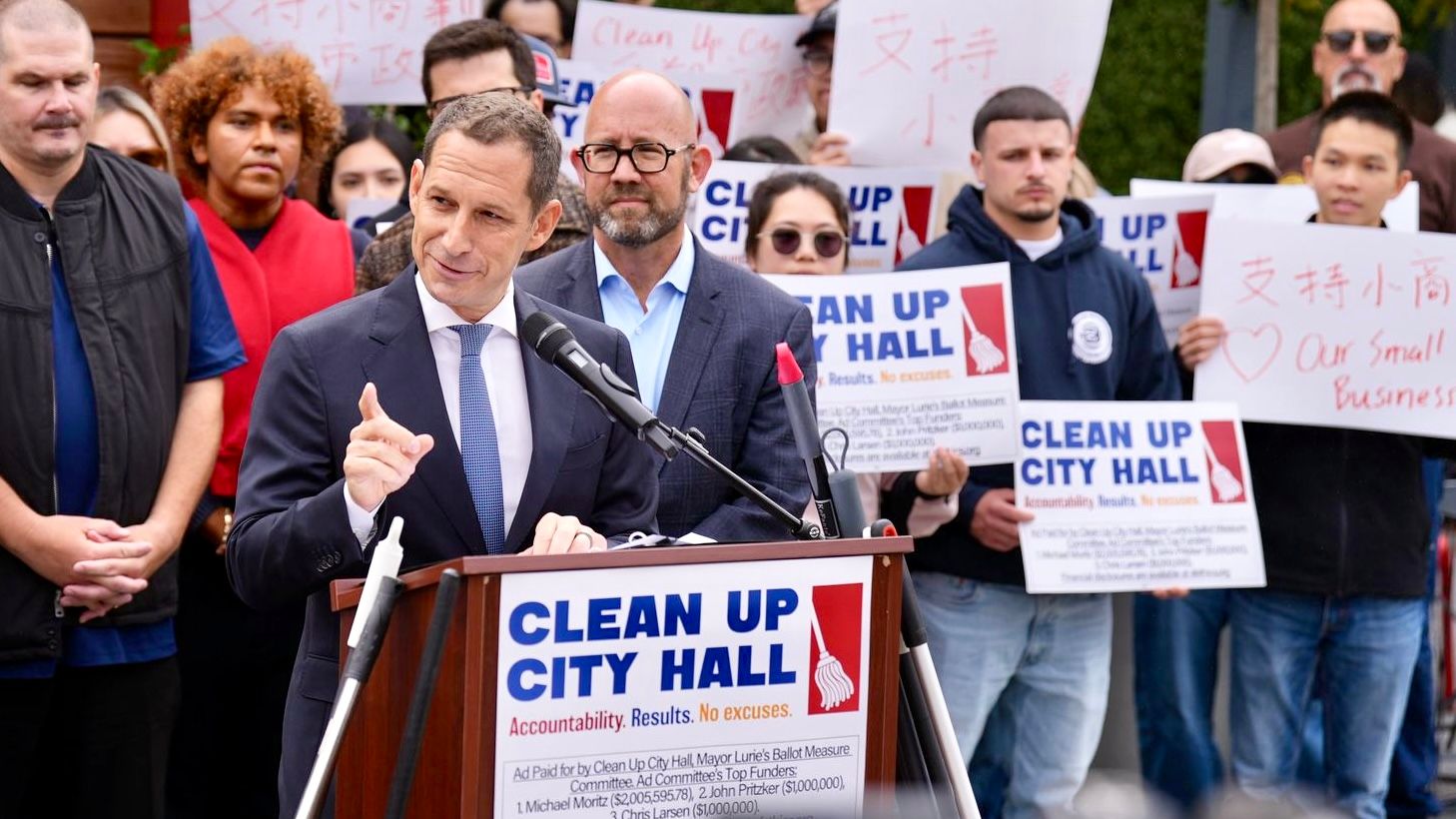
SAN FRANCISCO — Ten local measures have qualified for the November 3 election in San Francisco. Six of the measures aim to amend the City Charter across various perspectives and departments. Five of the ten measures are authored by Mayor Daniel Lurie: Propositions D, E, and F which aim to amend the City Charter to make policy implementation more efficient, and Proposition H which seeks to raise the parcel tax for 15 years to secure funds for the City’s Transportation agency.
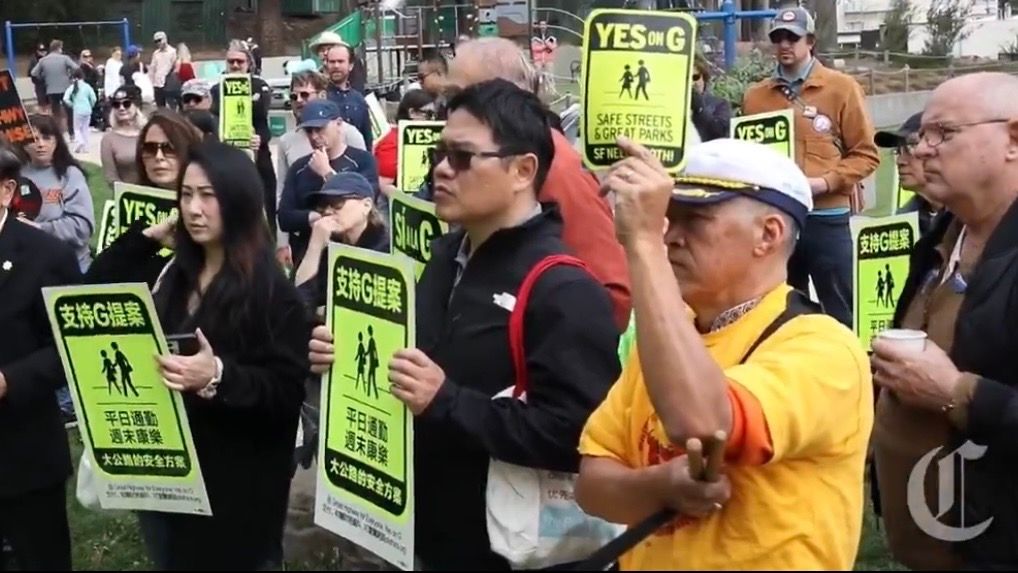
Members of the Chinese community in San Francisco have begun their efforts to gain more support from voters in the upcoming November election focusing on two local measures: Proposition G and Proposition H.
The Chinese community has actively engaged in campaigns to support Proposition G, which will reopen vehicular traffic on the Upper Great Highway on weekdays and keep the Sunset Dunes as a coastal park on weekends, and oppose Proposition H, which will add a 15-year property tax to fund the financially-troubled San Francisco Municipal Transportation Agency (SFMTA).
Proposition A — Revising and updating provisions of a City Charter amendment that affects various City Departments and Commissions
Prop A is authored by Board of Supervisors President Rafael Mandelman and supported by Lurie and seven other Supervisors. Connie Chan, Jackie Fielder, and Shamann Walton are the three Supervisors who do not appear on the list of endorsing the measure.
Prop A amends the San Francisco Charter to remove provisions referencing obsolete departments, require reliance on certain filing systems, and make other governance changes to local programs and departments.
"About every 30 years, City Hall sets aside its differences to clean up old, broken, and conflicting parts of our city's governing document called the city charter. Department heads, commissions, and the public suggest changes through a transparent, months-long process," Mandelman wrote on the ballot argument filed with the Department of Elections. "The mayor and a supermajority of the Board of Supervisors agreed on 110 small fixes that will help city government serve you better."
"The fixes fall into four categories: Outdated technology, wasteful duplication, zombie commissions, and confusing or badly worded laws," Mandelman wrote.
Proposition B — Establishing a Municipal Banking Corporation and a Public Bank to provide loans
Prop B is authored by District 11 Supervisor Chyanne Chen and supported by five supervisors: Bilal Mahmood, Myrna Melgar, Mandelman, Fielder, and Walton.
Prop B amends the San Francisco Charter to create a municipal finance corporation and a public bank that would exist as nonprofit corporations, each overseen by an oversight commission and a board of directors.
"Prop B will ensure that a San Francisco Public Bank is fiscally responsible, independent from political influence, and serves San Francisco's priorities," Chen wrote in the ballot argument. "A Public Bank puts the people of San Francisco over private profits to finance the things we need. The shareholders would be the people of San Francisco, so we benefit not only from our bank's profits but also the San Francisco projects it supports."
Proposition C — Revising calculations of contributions to Housing Trust Fund
Prop C is authored by District 7 Supervisor Myrna Melgar and supported by Lurie and Assemblymember Catherine Stefani.
Prop C amends the San Francisco Charter to require that contributions to the Housing Trust Fund, beginning in 2028, be equal to the greater of the following, until the annual appropriation to the fund equals $125 million or more:
— the amount equal to the past year's appropriation, plus 20% of the city's share of the 1% of ad valorem tax revenue resulting from the year-to-year increase; or
— the amount equal to the past year's appropriation, adjusted by the percentage increase in the General Fund Discretionary Revenue budgeted for that year.
"San Francisco's housing crisis is simple: rents and home prices have climbed faster than paychecks, and teachers, nurses, and multigenerational families are being priced out of the neighborhoods they grew up in or serve," Melgar wrote in the ballot argument for Prop C.
"For over a decade, the Housing Trust Fund has been San Francisco's foundation for building affordable housing, helping first-time buyers purchase a home, keeping first responders in the city they serve, and giving seniors a way to stay in their communities," Melgar wrote. "Prop C renews the Housing Trust Fund through 2028 and increases its annual funding to $125 million. Every year we wait, the fund stays capped while rents keep climbing."
Proposition D — Strengthening requirements for placing initiated local measures on the ballot
Prop D amends the San Francisco Charter to make the following changes to the ballot measure process:
— eliminate the provision permitting the mayor or four members of the Board of Supervisors to place a measure on the ballot without a vote of the entire board;
— require 8% of registered voters sign an initiative petition in order to place a measure on the ballot;
— require 10% of registered voters sign a petition calling a special election on the ballot measure;
— allow proponents of a ballot measure to withdraw the initiative from the ballot up to 102 days before the election.
Proposition E — Amending rules for city contract approvals and altering the term and responsibilities of the City Administrator
Prop E requires the Board of Supervisors to approve all city contracts that would generate more than $4.5 million or cost more than $25 million, and amends the city administrator's roles and authority as follows:
— grant the city administrator exclusive authority to propose ordinances governing procurement, and restrict the board from amending the ordinances;
— increase the city administrator's term from five years to ten years;
— declare that the city administrator's adopted procurement rules and regulations supersede conflicting department rules;
— permit the city administrator to implement a citywide policy for technology use.
Proposition F — Permitting mayoral restructuring of executive departments
Prop F amends the San Francisco Charter to allow nomination boards to recommend only one or more names to the mayor for a position, permits appointing officials to remove their appointees in most departments without cause, and permits the mayor to:
— reorganize executive branch departments, with some exceptions;
— hire deputy mayors; and
— hire and remove department heads.
Propositions D, E and F are all authored by Lurie. “San Francisco has made a lot of progress in the last two years. But we are still held back by a corrupt and broken system that only works for the insiders. You have the opportunity to change it in this election. Propositions D, E and F will make city government more accountable and deliver better results. I am asking you to join me in this fight to clean up City Hall. Vote yes on D, E and F,” Lurie said.
Lurie asked voters to support the entire package of ballot measures—A, D, E and F—to amend the City's Charter. "Proposition D gives more voters a voice on what appears on ballots," Lurie wrote in his ballot argument filed with the Department of Elections.
"Currently a minority of Supervisors, just 2% of voters or the mayor acting alone, can throw anything on the ballot without public input, transparency or proven community support," Lurie noted.
“Prop D requires a public vote of the majority or signatures from 8% of voters. It removes the mayor's sole authority to place measures on the ballot to ensure a fair balance of power. The signature requirement remains below the state standard of 10% and neighboring cities like Oakland," Lurie said.
"Prop E slashes waste in city contracting," said Lurie. "It can cost more than $25,000 to run a single contracting process. Basic purchases take years to deliver. Costs balloon out of control. That's because every year San Francisco hands out more than $5 billion in contracts with no limited oversight or accountability. The system creates waste at every level and is easily exploited."
Lurie said Prop E would empower a professional City Administrator to set transparent standards so contracts are awarded based on who is best for the job, not who is connected.
“The current system allows departments to operate as independent fiefdoms instead of coordinated parts of government. It protects the insiders instead of holding them accountable. Six department heads have been indicted or investigated for corruption in the last decade,” Lurie said. "The mayor can only hire and remove a handful of department heads when self-dealing is exposed or they fail to do their job."
Prop F allows the mayor to hire and remove most department heads. "Better organized and more accountable departments will deliver faster permits, cleaner streets and projects done on time and on budget," Lurie said.
Proposition G — Allowing private vehicles on the Great Highway In Sunset Dunes on weekdays, no change on weekends
Prop G permits private vehicles to use the Upper Great Highway, except on weekends and government holidays when it remains closed to private vehicles as the current coastal park, Sunset Dunes.
District 4 Supervisor Alan Wong, the Chinese American Democratic Club, and the Richmond Democratic Club have endorsed Prop G.
Wong voted no in 2024 on Prop K, which was authored by former District 4 Supervisor Joel Engardio to permanently close the Upper Great Highway to private vehicles and transform the roadway into a coastal park named Sunset Dunes.
Engardio was recalled by his District 4 voters following Prop K's passage. After Wong was appointed by Mayor Lurie in December 2025 to fill the seat left by Engardio, he tried to place a ballot measure in the June 2026 election to reopen the Great Highway. But Wong failed to secure at least three more votes on the Board of Supervisors to make it a qualified ballot measure.
"The west side felt that something was deeply unfair to them. Now that people have experienced both the 24/7 closure and the weekend compromise," said Wong in endorsing Prop G. "We have seen the pros and cons of the closure; this will be a chance for the people across the city to vote on it."
Chinese American Democratic Club urged voters to support Prop G. "Yes on G this November to share the Great Highway in the Sunset Dunes Park with cars to improve pedestrian safety in the neighborhoods and expand access to the park for those who need cars to access—seniors, disabled and working families. Safety and park, we can have both."
Proposition H - Imposing a 15-year annual property tax to fund the Municipal Transportation Agency
Prop H adds a parcel tax, to be in effect from 2027 to 2042, to fund San Francisco Municipal Transportation Agency (SFMTA) operations, with rates as follows:
- for single-family residential parcels: a base tax of $129, an additional $0.42 per square foot of building area between 3,001 and 5,000 square feet, and an additional $1.99 per square foot of building area above 5,000 square feet;
- for multi-family residential parcels: a base tax of $249, and an additional $0.195 per square foot of building area above 5,000 square feet, capped at $50,000 per parcel;
- for non-residential parcels: a base tax of $799, an additional $0.79 per square foot of building area between 5,001 and 50,000 square feet, an additional $0.84 per square foot of building area between 50,001 and 250,000 square feet, and an additional $0.99 per square foot of building area over 250,000 square feet, capped at $400,000 per parcel;
- for mixed-use parcels: a base tax of $799, and an additional marginal rate tax based on the rates for residential and non-residential parcels, capped at $400,000 per parcel;
- for parcels without buildings: a flat tax of $392 if the land area is more than 2,000 square feet.
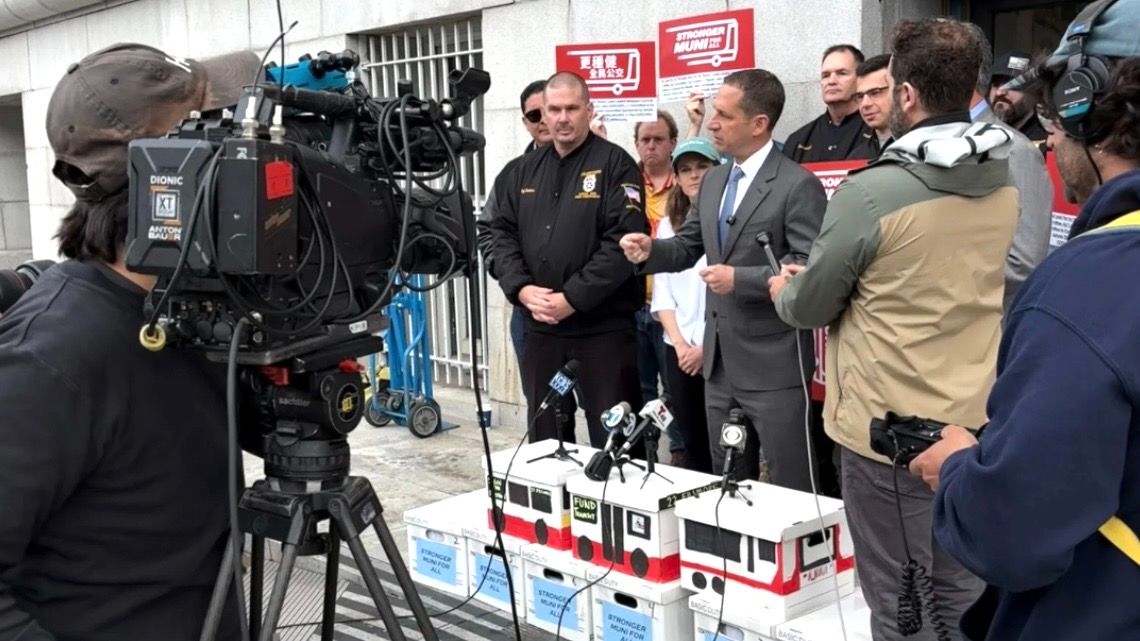
Prop H is authored by Lurie who started the ballot measure campaign "Stronger Muni for All" in March to collect signatures.
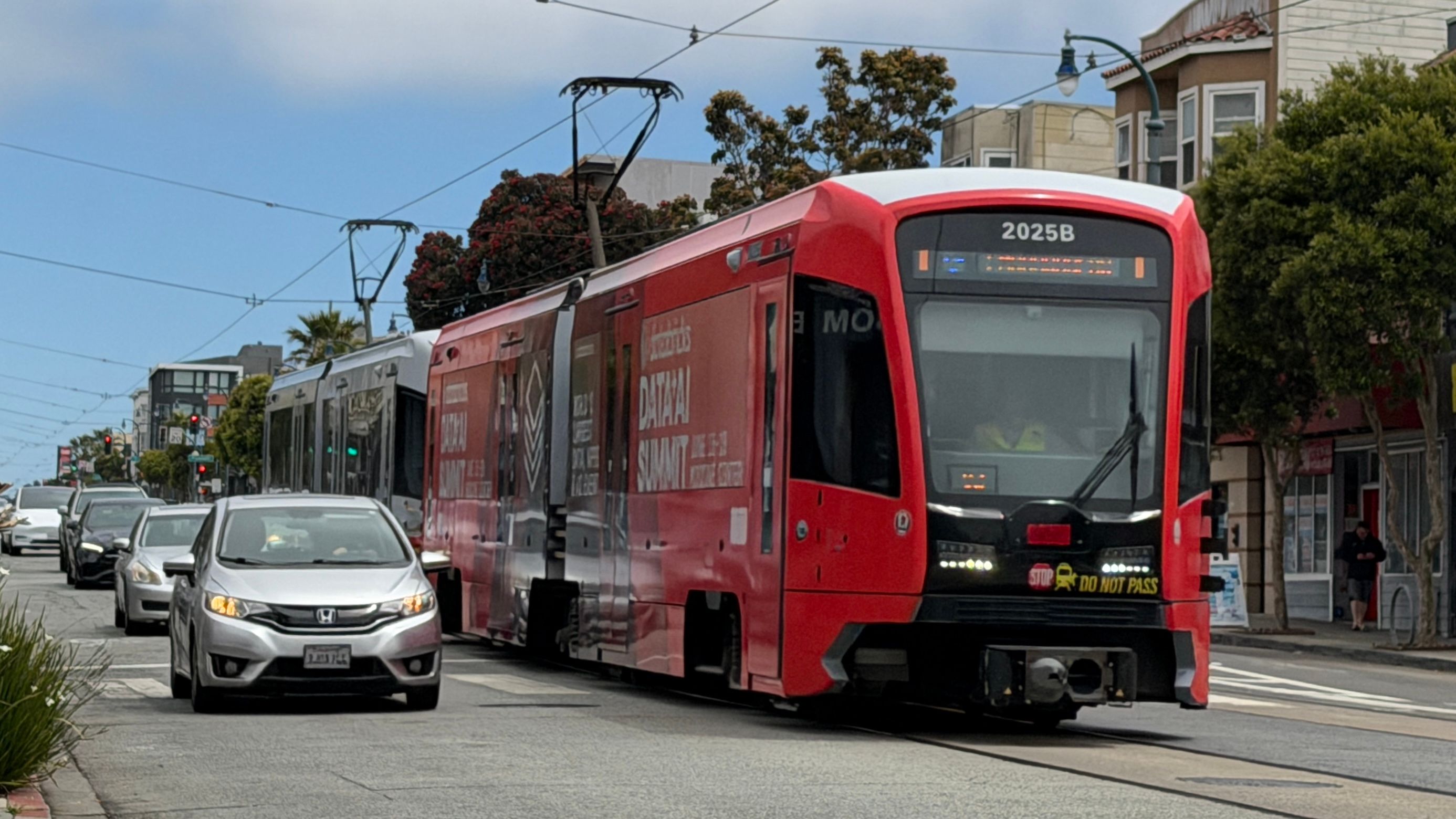
"The initiative would prevent catastrophic Muni service cuts and skyrocketing traffic congestion while securing the city’s economic recovery through a safer, more reliable, and more affordable transit system," Lurie said when announcing his petition drive to secure funds for the SFMTA which faces a budget shortfall of $307 million.
Prop H establishes a progressively structured parcel tax on commercial and residential properties in the City. Under the proposal, 95% of single-family residences would pay an extra annual parcel tax of $129, while large landowners would pay more up to a cap of $400,000.
Mark Gin, President of the newly-established Business League, filed an argument with the City's Department of Elections to oppose Prop H. "We support Muni. We want safe, reliable public transportation. But another long-term parcel tax is not the solution to SFMTA's financial problems," Gin wrote.
"Proposition H would create a 15-year parcel tax, beginning in 2027, with rates adjusted annually for inflation," Gin said. "San Francisco homeowners, property owners, small businesses, working families, and renters are already struggling with one of the highest costs of living and doing business in the country. Another long-term tax adds more financial pressure to our city."
Proposition I - Dedicating half of revenue from the real property transfer tax to housing programs
Prop I dedicates 50% of revenue received from the property transfer tax on real estate priced at more than $10 million to affordable housing, including social housing developments, homelessness prevention programs, and housing assistance.
Prop I is authored by the Democratic Socialists of America - San Francisco and supported by unions and organizations serving tenants.
Scott Feeney, Secretary of the Democratic Socialists of America, wrote in support of Prop I that San Francisco voters approved a new tax in 2020 on the sale of properties worth more than $10 million. That tax provided emergency rent relief to more than 10,000 households and helped preserve and build hundreds of affordable homes.
"It worked until politicians ignored the will of voters," Feeney wrote. "In the past two years, none of this revenue has gone to affordable housing. Prop I will finally keep the promise and implement the measure voters approved. It doesn't raise taxes—it uses only revenue from a tax voters already approved."
Proposition J - Removal of foreclosure exemption for real property transfer tax
Prop J removes the real estate transfer tax exemption for property transfers to the lender in lieu of foreclosure or transfers resulting from a property foreclosure.
Prop J is co-authored by District 5 Supervisor Bilal Mahmood and Mayor Lurie, and is supported by six Supervisors. Connie Chan, Stephen Sherrill, Jackie Fielder and Shamann Walton are the four Supervisors not on the list of endorsements.
In 1984, San Francisco created a tax break for homeowners who couldn't pay their mortgage and would lose their homes to foreclosure. "But the same tax break is also being given to financial institutions and corporate lenders when they acquire office towers, mega apartment complexes, and industrial buildings through foreclosure," Mahmood wrote.
"Prop J ends the unfair tax break for corporate lenders. Prop J will raise between $100 million and $150 million every year for our general fund," Mahmood wrote.
- 5 of 10 local measures in San Francisco authored by Mayor Lurie to amend City Charter and secure funds for SFMTA
- Opinion: Vote no on Prop H — small businesses cannot pay more
- Prop G gets a second chance for San Francisco voters to decide the fate of the Upper Great Highway in the November election
- 23 parking spaces during commute hours added in Chinatown amid 3 major renovation projects
- Asian supermarkets are booming in the San Francisco Bay Area with intense industry competition
- Architect Dartmond Cherk: Taking away this symbolic bridge would deflate the standing of the Chinese community in San Francisco
- Our Mission and Policy
- San Francisco: Kearny Street, between Clay and Washington streets, to be fully closed Aug. 1-2 and Aug. 8-9; Broadway Tunnel closed Aug. 15-16