Prop G gets a second chance for San Francisco voters to decide the fate of the Upper Great Highway in the November election

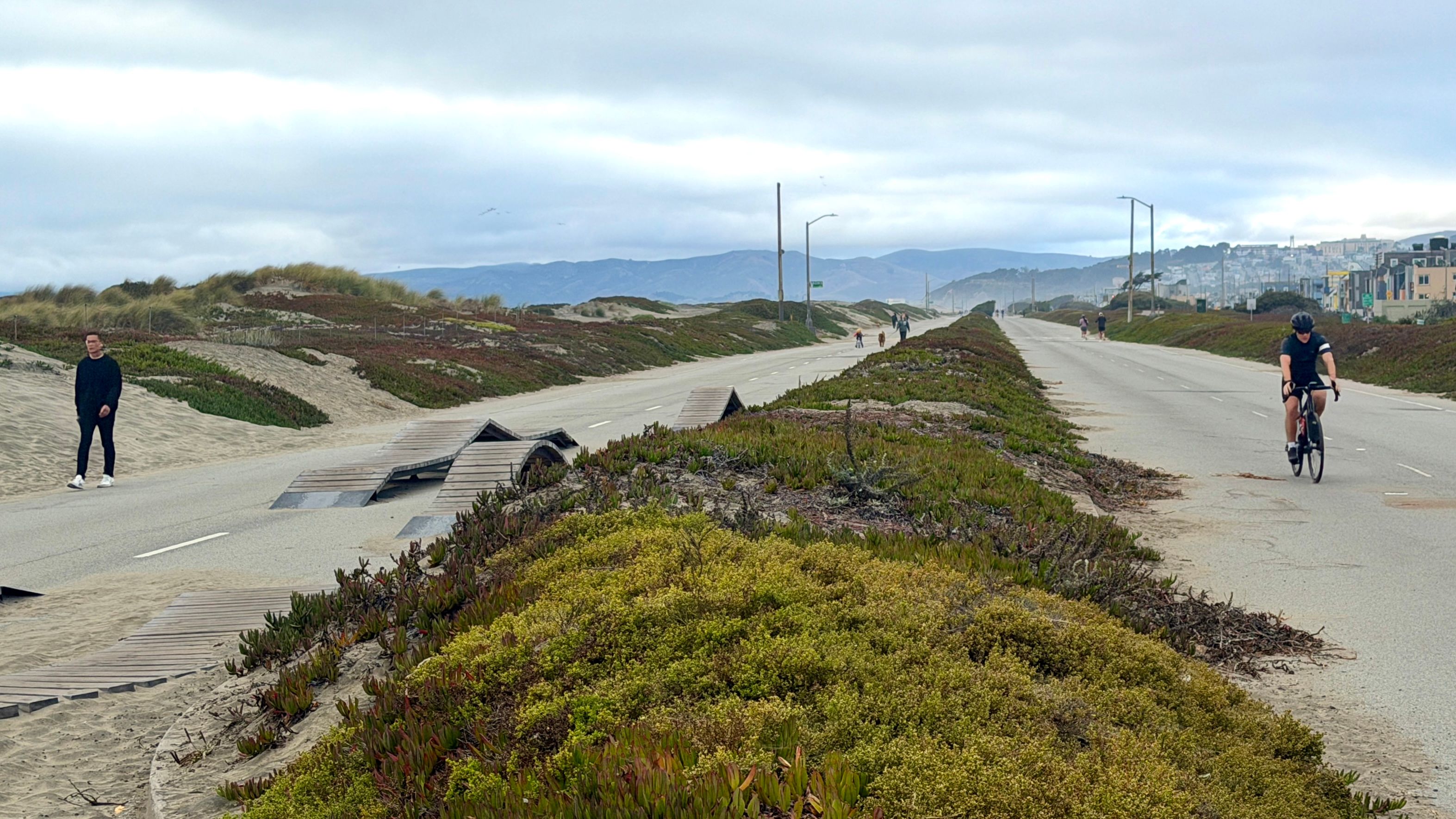
SAN FRANCISCO — Voters will decide if San Francisco can implement 10 local measures in the upcoming November election. Among the 10 measures is Proposition G (Prop G), which gives citywide voters a second chance to determine the fate of the Upper Great Highway segment in the Sunset District: whether it remains solely a coastal park or reverts to the compromise format of opening the roadway to private vehicles on weekdays and closing it for park use on weekends.
Prop G is widely known to be supported by members of the Chinese and Asian communities in San Francisco and San Mateo Counties. However, the San Francisco Democratic County Central Committee (DCCC) opposed endorsing Prop G by a 16:4 vote, a large margin that included five of 11 Asian members on the committee.
Prop G was also one of the only two local measures among the total 10 that the DCCC rejected for endorsements in San Francisco. The other measure was Prop I, which is proposed to dedicate 50% of revenue received from the property transfer tax on real estate priced above $10 million to affordable housing.
In the endorsement meeting held by the DCCC at Visitacion Valley Community Center on August 26, Proposition G received only four yes votes among 32 committee members. Sixteen members voted no, six members abstained, and five members were absent including Supervisor Connie Chan who is running for Congress to fill the seat left by U.S. Representative Nancy Pelosi in January 2027.
The DCCC is a body representing the City's Democratic Party with 32 members. Twenty-four sitting members were elected by San Francisco voters in March 2024. The other 8 are ex officio members from elected federal and state positions. Twelve out of 32 members are Asian American.
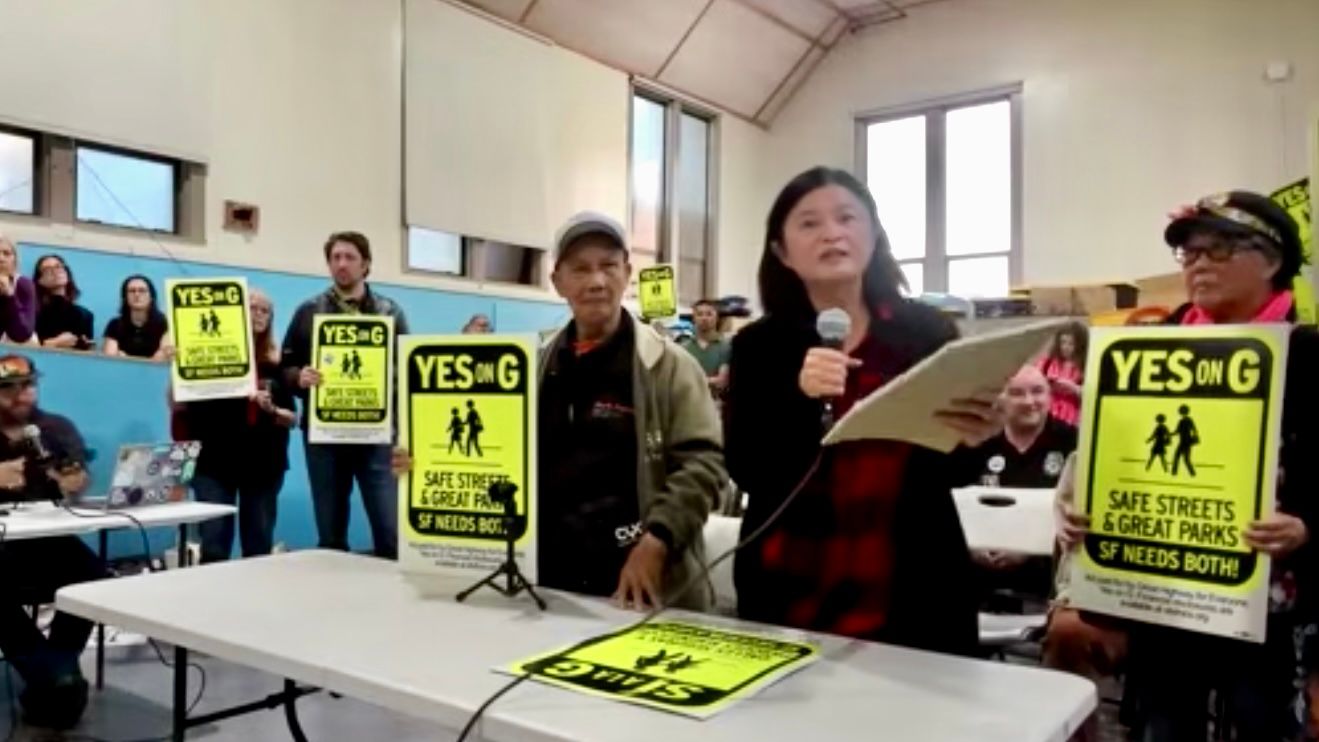
One of the DCCC's key duties is to make endorsements for each election. The endorsement meeting took place on August 26 at the Visitacion Valley Community Center. Candidates running for public offices, proponents and opponents of 10 local ballot measures in the November 3, 2026 election participated in the meeting and packed the rooms holding signs.
Prop G is seen as the most controversial local ballot measure among the 10 initiatives San Francisco voters will decide in the November election.
All four yes votes on the DCCC in support of Prop G came from Asian American members: State Treasurer Fiona Ma, 2021-2022 San Francisco Redistricting Task Force member Lily Ho, former District 1 Supervisor candidate Marjan Philhour, and Stop Asian Hate activist Jade Tu.
Among the 16 no votes, five were from Asian American members: San Francisco Planning Commissioner Michael Chen, former District 5 Supervisor and State Insurance Commissioner candidate Jane Kim, District 5 Supervisor Bilal Mahmood, former District 4 Supervisor Gordon Mar, and District 8 Supervisor candidate Michael Trung Nguyen.
Two Chinese American members were absent from the endorsement meeting on August 26 without casting votes: District 1 Supervisor Connie Chan and former District 11 Supervisor candidate Michael Lai.
DCCC Chair Nancy Tung was one of the six members to abstain from voting for Prop G.
Prop G is a measure returning after Proposition K was approved by 54.73% of citywide voters in 2024. Prop K was authored by former District 4 Supervisor Joel Engardio aiming to permanently ban private vehicles on the Upper Great Highway in his district and to transform the roadway into a coastal park named Sunset Dunes which was open for the public in 2025.
During the pandemic, a compromise agreement was reached for the Upper Great Highway: the two-mile-long roadway was open for vehicular traffic on weekdays and closed to vehicles on weekends, serving a fully recreational purpose for visitors to walk, jog, and bike. Engardio's Prop K proposal also aimed to end the compromise which was implemented for four years.
Although Prop K was approved by a majority of citywide voters in 2024, voters in the west and south sides of the city were overwhelmingly against the measure. All these neighborhoods have large Asian and Chinese populations including Richmond, Sunset, Ingleside, Excelsior, Outer Mission, Portola and Visitacion Valley.
As a result of Prop K's passage, the measure's opponents filed a petition to gather signatures for a recall election held in September 2025. Engardio was ultimately recalled and removed from office by District 4 voters.
The closure of the Upper Great Highway has created traffic gridlock in the west side neighborhoods, especially the Richmond and Sunset districts during commute rush hours.
In 2026, Prop K's opponents filed another petition to gather signatures to place an initiative on the ballot for reopening the Upper Great Highway. They fulfilled all the requirements to qualify Prop G for the ballot, allowing citywide voters to decide again the fate of the Great Highway.
DCCC Chair Tung explained why she would abstain from her vote on Prop G in the meeting. "I find this a very difficult ballot proposition. For one, Sunset Dunes is an extraordinarily popular park in the city and because of Prop K, we know that overwhelmingly people in this city favor the park, so the likelihood of success of Proposition G is, you know, not likely."
"But what I see are people who feel disenfranchised. I see that there are members of a community that have become engaged and who are very very upset and that is reflected in the recall of the supervisor who helped pass Prop K," Tung said.
"This is an important thing to recognize that just because the numbers say it is only adding a minute or two to somebody's commute on average. That doesn't mean that the people who are injured here and feel unheard are average. They aren't just numbers," Tung added.
"There are people who do have to take their kids to school or after school programs, who do have to take their aging parents to medical appointments, who have to get to work and do all the things that you know is not necessarily facilitated by a very long closed roadway or other avenues or e-bikes or public transit. Sometimes you just have to drive a car in this city. I am a person who drives a car," Tung said.
"I have a great deal of sympathy for people who are proponents of Prop G and who are here tonight, who spent time to be here and to be with the party. In the Prop K endorsement vote, I voted no. And for the recall of Joel Engardio, who is somebody I considered a friend, I voted not to endorse a position for the party," Tung said. "I don't think that yes is the way to do it. I will be abstaining from this vote. So I urge the members of this body to vote your conscience on it."
Chinese American Democratic Club (CADC) has endorsed Prop G. The Club’s President Josephine Zhao spoke in the DCCC meeting.
"Yes on G is the key. No on G means cutting off working people's ability to get to work on time and run their families. No on G means working families have to move out. It will be bad for school, enrollment and the workforce. No on G will be the beginning of the end for large families, immigrants, and AAPI communities like this," Zhao said. "Yes on G means expand access, keep the great park, improve pedestrian safety in the neighborhood. We can do both. We can do it all."
"I can tell you that I have knocked on well over 3,000 doors, and I have collected many signatures for the petition to put this on the ballot. I can tell you that fairness is what we are looking for: the compromise," Albert Chow, District 4 Supervisor candidate and one of the organizers of the No on Prop K and Recall Engardio campaigns, spoke at the DCCC meeting.
"We are not looking to shut down the park. We are here to use that space for two purposes: putting the fast traffic in our neighborhood where it belongs and also on the weekends when it truly is a palace where people want to enjoy it," said Chow.
"I have lived in the Sunset for 50 years. I am a small business owner for 43 years. I know my neighborhood. These people are out here with all these signs representing the fervor that is in a neighborhood that we feel the injustice has been done to our neighborhood," Chow said.
The No on G campaign issued a statement after winning the DCCC's endorsement by a 16-4 vote. "Prop G would demolish Sunset Dunes, San Francisco's third-most popular park. It would spend more than $20 million in taxpayer money over five years to build a failing road that dead-ends at Sloat and closes frequently due to sand."
"Sunset Dunes drew nearly two million visits in its first year. Outer Sunset small businesses report revenue increases of 20 to 50% since the park opened, the endangered Snowy Plover population is at its highest level in two decades, and three separate traffic analyses have found minimal impact on westside commutes. Car crashes in the Sunset have declined."
“As a city, we don’t close our parks – we fight for them. We’re proud to have built a strong consensus in support of a positive, forward-looking vision for the coast," Lucas Lux, Campaign Manager for No on G, said in the statement. "We’re grateful to our partners and allies for understanding the stakes and standing with us to defend our park.”
- Voters in 5 counties of the San Francisco Bay Area to decide whether to raise the sales tax by 0.5% or 1% for 14 years to fund public transit
- Opinion: A voice for every community and the next generation of San Francisco
- Opinion: Let’s vote yes on 5-county Bay Area regional measure and San Francisco Prop H for clean, safe, and reliable public transit!
- California leads in dedicating September 25 as annual Dolly Parton Day in honor of the American icon’s legacy of love
- Governor launches new era of CalKIDS accounts working with federal to maximize free funds for all children in California
- 5 of 10 local measures in San Francisco authored by Mayor Lurie to amend City Charter and secure funds for SFMTA
- Opinion: Vote no on Prop H — small businesses cannot pay more
- Prop G gets a second chance for San Francisco voters to decide the fate of the Upper Great Highway in the November election