Opinion: Vote no on Prop H — small businesses cannot pay more
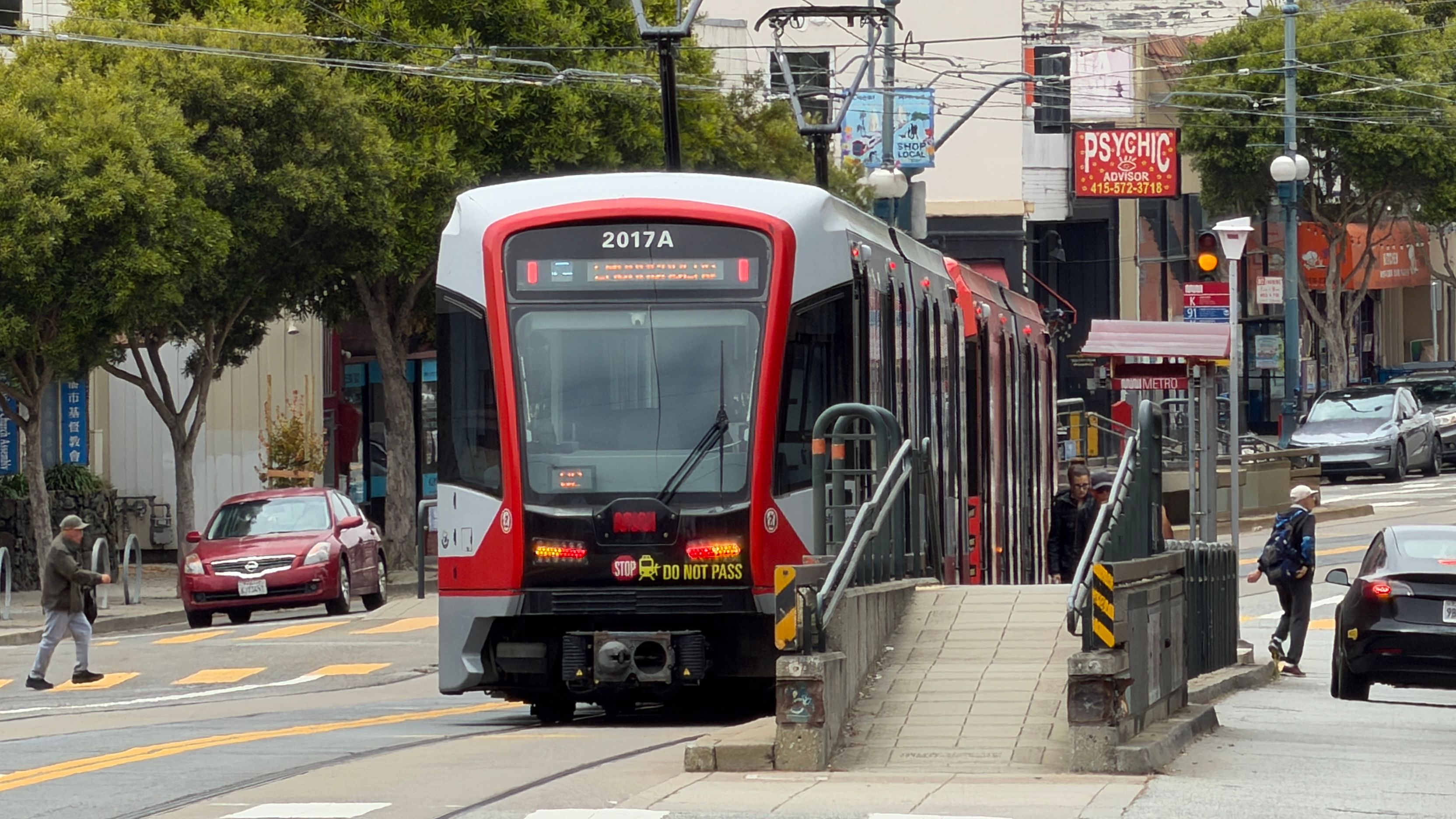
I am here to speak in opposition to Proposition H.
First, let me make one thing very clear: We are not against Muni. We understand that Muni is essential to San Francisco. Our seniors, workers, students, residents, visitors, customers, and businesses all depend on a reliable public transportation system.
But supporting Muni does not mean giving San Francisco Municipal Transportation Agency (SFMTA) another 15 years of taxpayer money without first demanding accountability, transparency, and better management.
For me, this is not just about numbers on a budget. It is about our actual experience working with the SFMTA. Look at Ocean Avenue.
Our merchants questioned whether taking away a general traffic lane and converting it into a red transit lane was justified by the approximately three-minute transit-time benefit being discussed.
We asked the SFMTA to provide the research and data supporting that benefit. We also asked for a study comparing what happens to Muni travel time, automobile travel time, traffic congestion, pedestrian safety, and local businesses when general traffic is reduced to one lane.
Months have passed, and we still have not received the complete analysis we requested.
If the SFMTA cannot provide timely answers to a community asking basic questions about one transportation project, why should taxpayers give the agency a new source of funding for the next 15 years?
This is exactly why we are concerned about Proposition H. Before asking for more money, the SFMTA needs to demonstrate greater transparency about how existing taxpayer dollars are being spent.
We continually hear that the SFMTA needs more money. But taxpayers also deserve to ask whether the money SFMTA already receives is being managed efficiently.
We have seen transportation projects where communities question the cost of signs, street changes, engineering, red lanes, consultants, and implementation.
When relatively small street projects can cost hundreds of thousands—or millions—of dollars, taxpayers have every right to ask: Why does it cost so much? Who approved the expenditure? What measurable benefit did taxpayers receive? And was there a less expensive solution?
Ocean Avenue is a good example. When millions of dollars are being discussed for transportation improvements while neighborhood merchants are questioning whether the red transit lane will actually benefit the entire corridor, the City should answer those questions before spending the money.
There is another issue: revenue.
The SFMTA already earns advertising revenue from Muni vehicles, transit shelters, and certain stations. But why aren’t we doing much more? Why not create additional advertising and sponsorship opportunities at stations and terminals? Why not allow neighborhood businesses to advertise at nearby Muni stations at affordable rates?
That could accomplish two things at the same time: generate additional revenue for Muni and promote the local businesses that depend on Muni customers.
Before creating another tax, we should explore every reasonable opportunity to generate revenue from the transportation system itself.
There is also a larger transportation-policy problem.
The SFMTA is responsible for public transportation, but our streets belong to everyone. They belong to bus riders, pedestrians, seniors, people with disabilities, delivery vehicles, workers, customers, taxis, families, and motorists.
Drivers also pay taxes and fees and have legitimate transportation needs. Transportation policy should not be designed as if every improvement for Muni automatically justifies making conditions worse for everyone else.
A successful transportation system requires balance. When you remove traffic lanes, eliminate parking, restrict turns, create red lanes, and reduce loading access, there are consequences.
Congestion does not simply disappear. Sometimes it moves onto another street. Businesses lose customer access. Delivery vehicles have greater difficulty reaching stores. Cars can become trapped in intersections and crosswalks. And pedestrians can face new safety problems when congestion becomes worse. We have seen these concerns firsthand in our neighborhood commercial corridors.
And now Proposition H asks San Franciscans to provide approximately $150 million more every year to reduce SFMTA deficit, plus roughly $10 million for marginal service-quality improvements.
That raises a very simple question: If we give SFMTA more money, what exactly are San Franciscans getting in return?
Proposition H would impose a new parcel tax for 15 years. For small commercial properties of 5,000 square feet or less, the tax starts at $799 per year and can increase with inflation.
And although the tax bill goes to property owners, many small businesses rent their locations. Depending on their commercial leases, property-related costs may ultimately be passed on to business tenants.
So once again, our small businesses may end up paying. We are already paying higher labor costs, higher insurance, higher utilities, higher rents, taxes and fees. At the same time, businesses are dealing with construction, loss of parking, traffic restrictions, reduced customer access, and declining foot traffic.
Now we are being asked to help solve the SFMTA financial problems too. Where does it stop?
If Proposition H hurts businesses, causes operating costs to rise, and contributes to more businesses closing, San Francisco loses tax revenue anyway.
You cannot strengthen public transportation by weakening the businesses and taxpayers who ultimately help pay for it. That is why I believe the City has the order backwards:
First, show us the complete financial picture.
First, show us where the money is being spent.
First, complete the efficiency review.
First, identify unnecessary expenses.
First, develop additional revenue sources such as advertising and sponsorships.
First, demonstrate that transportation projects provide measurable benefits not only to Muni riders, but to the entire community.
And most importantly, listen to the people who live, work, drive, shop, and operate businesses in these neighborhoods. Then, if there is still a genuine financial need, come back and talk to the taxpayers.
We support Muni. But supporting Muni should not mean giving SFMTA a blank check.
We support public transportation, but we also support small businesses.
We support transit riders, but we also recognize the needs of motorists, pedestrians, delivery drivers, seniors, workers, and neighborhood residents.
We support investment—but investment must come with accountability.
Before asking us for more money, show us better management.
Before asking us for 15 years of taxes, show us the results.
Before asking small businesses to carry another burden, show us how you are going to protect them.
And before asking San Francisco taxpayers to rescue the SFMTA financially, show us that the SFMTA has done everything possible to reform itself first.
For these reasons, I oppose Proposition H.
_________________________________________________________________________
Ed Siu is the Founder and President of the Chinatown, Sunset and Ocean Avenue Merchants United Association of San Francisco. The association was first established in Chinatown in 2020, expanded to Sunset in 2023 and Ocean Avenue in 2026. It serves its members with a mission to support merchants in the neighborhoods.
- Opinion: Vote no on Prop H — small businesses cannot pay more
- Prop G gets a second chance for San Francisco voters to decide the fate of the Upper Great Highway in the November election
- 23 parking spaces during commute hours added in Chinatown amid 3 major renovation projects
- Asian supermarkets are booming in the San Francisco Bay Area with intense industry competition
- Architect Dartmond Cherk: Taking away this symbolic bridge would deflate the standing of the Chinese community in San Francisco
- Our Mission and Policy
- San Francisco: Kearny Street, between Clay and Washington streets, to be fully closed Aug. 1-2 and Aug. 8-9; Broadway Tunnel closed Aug. 15-16
- Carla Lee Hurley and Kirk Yin, 2 bilingual and community-oriented police officers, promoted to Captains in SFPD