Opinion: Opposition to Prop H should not be met with threats to eliminate 19 bus routes
Many San Francisco residents oppose Proposition H because they are concerned about the long-term financial burden this 15-year parcel tax would place on homeowners, commercial property owners, tenants, small businesses, and the city’s overall business environment.
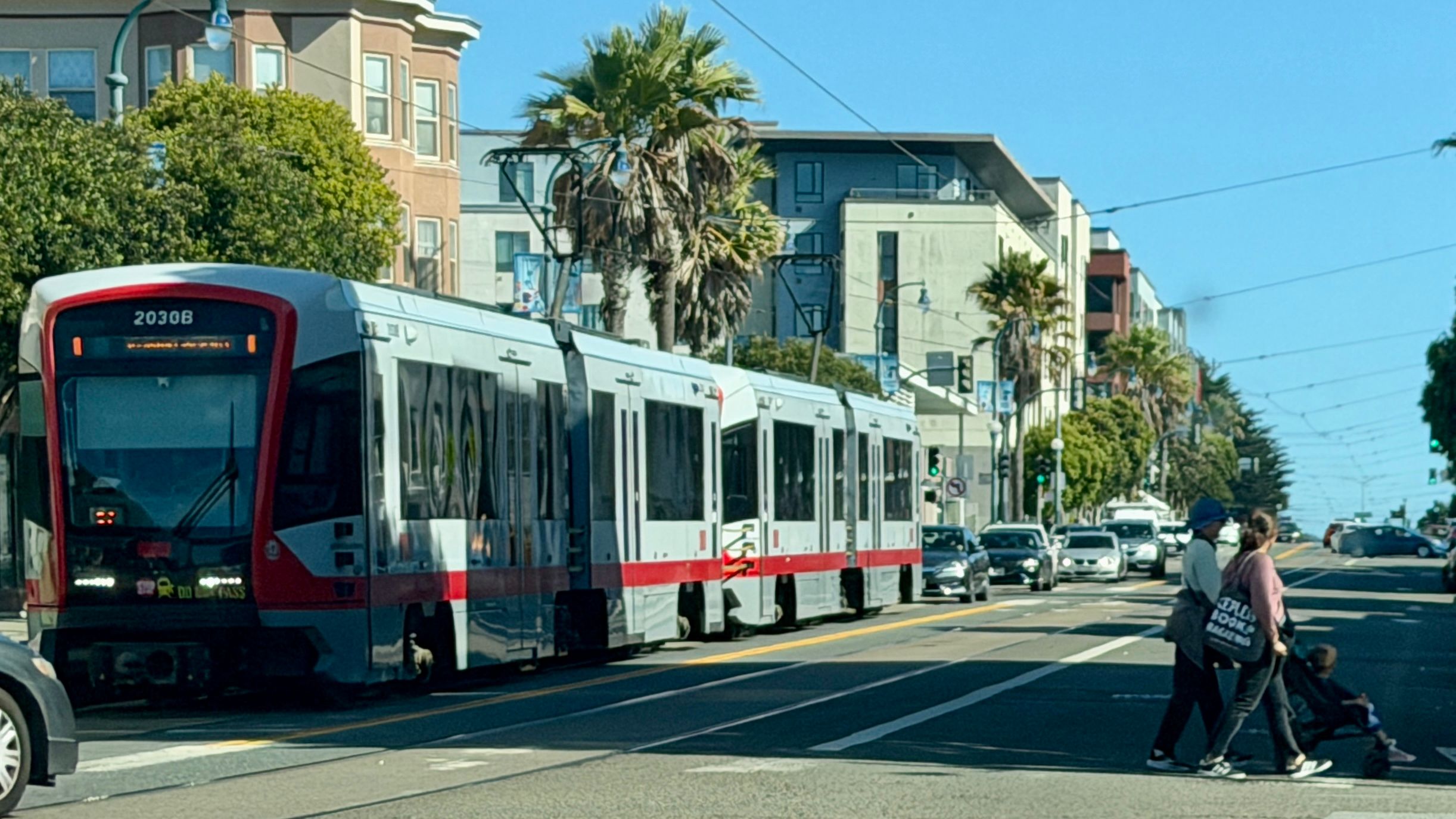
However, instead of carefully reviewing these public concerns, the City and the San Francisco Municipal Transportation Agency (SFMTA) have warned that if Proposition H does not pass, Muni may eliminate 19 bus routes, reduce service frequency, and potentially suspend cable car and historic streetcar services.
This approach gives the public the impression that essential transportation services are being used as leverage to pressure voters into approving a new tax.
Public transportation is a basic service that thousands of residents, workers, seniors, students, and people with disabilities depend upon every day. It should not be used as a political bargaining tool. Voters should not be forced to choose between paying a new tax for 15 years and losing essential transportation services.
It is also important to clarify that Proposition H is not a 15-year bond. It is a new parcel tax that would remain in effect for 15 years. If approved, homeowners, multi-unit residential properties, commercial property owners, hotels, offices, and industrial properties would be required to pay an additional annual tax.
I do not oppose public transportation, nor am I calling for Muni services to be reduced. On the contrary, we support a dependable, safe, convenient, and financially responsible public transportation system.
However, before asking the public to pay a new tax for the next 15 years, the City and SFMTA must answer several important questions:
1. Why has SFMTA failed to develop an effective long-term financial plan and control its operating expenses?
2. Are there duplicated positions, excessive staffing, or inefficient management structures within the agency?
3. Have red transit lanes, parking programs, road signs, construction projects, and other transportation initiatives delivered benefits that justify their costs?
4. Why has SFMTA not done more to enforce fare payment and reduce revenue losses caused by fare evasion?
5. Why have stations, transit terminals, vehicles, and other transportation facilities not been more effectively used to generate advertising and commercial revenue?
6. Before proposing another tax, what administrative expenses has SFMTA reduced, and what specific management problems has it corrected?
7. Has SFMTA provided the public with complete and transparent financial information showing exactly how its revenue is collected and spent?
If the City allows a public agency facing financial difficulties to threaten cuts to essential services unless voters approve a new tax, what prevents other departments and public agencies from using the same tactic in the future?
This is neither responsible public administration nor sound financial management.
The proposed service reductions are currently contingency plans rather than final decisions. The City should therefore use this opportunity to present alternative solutions instead of repeatedly emphasizing only the most severe possible consequences.
The City and SFMTA should immediately:
– conduct an independent financial and management audit;
– disclose departmental, staffing, consulting, contract, and construction expenses;
– suspend nonessential projects that have not demonstrated measurable public benefits;
– strengthen fare-payment enforcement; – expand advertising, commercial partnerships, and other non-tax revenue sources;
– conduct genuine and transparent consultations with residents, merchants, and transit riders; and
– present alternative financial plans that do not depend entirely upon imposing a new 15-year parcel tax.
Residents have the right to oppose a tax proposal without being threatened with the loss of essential public services.
If SFMTA’s management and structural financial problems are not corrected, additional tax revenue may temporarily fill the budget gap, but it will not solve the underlying problem. Eventually, the financial crisis will return.
The people who will suffer are not only homeowners and merchants, but also transit riders, working families, seniors, students, and everyone who depends upon a functioning public transportation system.
Most importantly, this approach will further damage the public’s trust in City government.
We support public transportation, but we oppose using service cuts to pressure the public into approving a new tax. Reform first. Establish accountability first. Provide full financial transparency first. Only then should the City ask taxpayers to contribute more.
______________________________________________________________
Edward Siu is the Founder and President of the Chinatown, Sunset and Ocean Avenue Merchants United Association of San Francisco. The association was first established in Chinatown in 2020 and expanded to Sunset in 2023 and Ocean Avenue in 2026. It serves its members with a mission to support merchants in the neighborhoods.
- Chinese community members say Prop H unfairly makes property owners pay for the San Francisco public transit agency’s shortfalls
- Proposition B authored by Supervisor Chen to create a Public Bank in San Francisco faces mounting opposition
- Opinion: City College opened doors for my family. Let’s keep them open.
- Opinion: Share the Great Highway. Keep San Francisco inclusive. Yes on G.
- A pre-election national AAPI poll: More AAPI adults trust Democrats over Republicans in handling issues
- Opinion: Opposition to Prop H should not be met with threats to eliminate 19 bus routes
- Voters in 5 counties of the San Francisco Bay Area to decide whether to raise the sales tax by 0.5% or 1% for 14 years to fund public transit
- Opinion: A voice for every community and the next generation of San Francisco